STEM Programs
Science, technology,engineering or math (STEM) program details for Frontiers Session I are listed below. When applying, rank your top three choices for a STEM program. Learn more about the Frontiers Session I humanities and arts workshops.
Aerospace Engineering
Explore the science of flight to learn how wings and aircraft create lift to fly. Basic concepts in aerodynamics including drag, streamlining, airfoil stall and aircraft design will be studied. You'll conduct wind- and water-tunnel experiments to visualize the flow over aircraft, and run computer simulations for different airfoil shapes. Using what you have learned, you'll design and build a simple model aircraft, test it in the wind tunnel, and see it soar in free-flight.
Biomedical Engineering (New this year)
At the crossroads of engineering, biology, and medicine lies an exciting science making historic breakthroughs that are extending lives, re-enabling the disabled, and vastly improving our quality of life. This is biomedical engineering, and WPI is at the forefront of research that is leading to many of these breathtaking developments. You will develop innovative solutions to real world problems. You will also build and test prototypes in this exciting field. Spend a couple of weeks of your summer engaged in our project based biomedical engineering program and begin addressing our Nation's medical needs.
Biology and Biotechnology
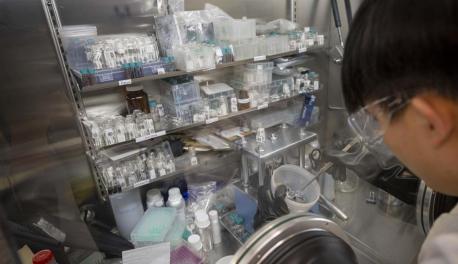
Do you know what PCR, GFP, LAL, GMO, EMG, TEM, and PDH mean? If you join us for Frontiers Biology, you will decipher those acronyms as you: fingerprint DNA, insert a glowing green gene into bacteria, examine the horseshoe crab’s contributions to medicine, track down rogue genes in papayas and corn, record electrical signals from your own nerves and muscles, use a Transmission Electron Microscope to go deep inside of cells, and change cell structure in minutes by adding hormones you have extracted. And that’s just a partial list! You will do detective work with antibodies, carry out experiments of your own design, and finish the two weeks by sampling the results of your new skills in zymurgy and cryogenics: root beer you fermented and ice cream that you made with liquid nitrogen. You and your classmates won’t be sitting in class much; it’s all hands-on! Our labs have just been renovated and are a great place to work, learn, and maybe find out whether Bio/Biotech would be a good college major for you.
Chemistry and Biochemistry
Shrink down to the world of molecules and explore how life functions at one of its most fundamental levels. Combine the newest technologies in the fields of chemistry and biochemistry to explore what happens when molecules collide; peel apart proteins and DNA; discover how enzymes work; and use computer modeling to see what biomolecules look like in 3-D. You'll see how chemistry can make color, fire, light, and electricity; you'll use the latest genetic and biochemical techniques to create organisms that glow.
Civil and Environmental Engineering
The field of civil and environmental engineering is essential for improving the quality of life in our society and protecting the environment. This discipline includes sustainable design and construction of roads, bridges, tunnels, dams, tall buildings, water and waste-water treatment plants among others. You will learn about different areas of civil and environmental engineering, and you will also complete hands-on projects involving laboratory testing of materials and structures, computer analysis and design of structures, water quality sampling and testing, and computer analysis to understand how human activities affect water quality in the environment. Students who attend this Frontiers I session may be interested in continuing to explore topics of sustainability in the Frontiers II session: Global Sustainability.
Computer Science
In this self-paced program, you'll have the opportunity to explore the world of programming as it is used in the World Wide Web and in object-oriented languages such as Java. You'll also explore graphical and distributed programming environments. You'll have a chance to incorporate the work as part of effective multimedia interfaces for content of interest to you. In addition, special topics in computer science will be discussed according to student interest.
Electrical and Computer Engineering
Discover the fascinating world of electrical and computer engineering through classroom exercises and laboratory hands-on activities. Build and solder projects you can take home including a heart pulse indicator and binary clock. Learn to use lab equipment including power supplies, function generators, and oscilloscopes to test circuits that you build. Apply this knowledge to a design project that you'll be working on throughout the course. Topics include audio amplification, biomedical applications, analog signal processing, and digital logic.
Environmental and Sustainability Studies
Environmental professionals must not only be competent in science or engineering, they must understand the integrated, interdisciplinary nature of environmental problems, their causes and solutions. Why? Today’s environmental professionals, whether working to preserve a resource or an ecosystem, build a bridge or a waste water treatment plant, must design for and communicate with a wide range of interest groups. In this program, you will discuss the integration of the scientific, technical, and social dimensions of environmental issues. Students will engage several key contemporary environmental themes and conduct hands-on fieldwork with local organizations. Students who attend this Frontiers I session may be interested in continuing to explore topics of sustainability in the Frontiers II session: Global Sustainability.
Interactive Media and Game Development
Combine technology with art to create an interactive experience. Take on the role of programmer or artist, and work on a team to bring a game to life. Draw and model your environment, add your characters and sound effects, and tell your story. Break down your idea into simple rules, write your algorithm, use powerful scripting languages, and playtest your game with your friends.
Mathematics
Learn how a mix of classical mathematics and modern technology can be used to solve current problems and open up new areas. Use this background to examine encryption of numbers on the Internet via the RSA algorithm, and analysis of human voice patterns and musical instruments through Fourier methods. Specific problems of current information technology that these address include the need for secure transmission of data, such as credit card numbers over the Internet, and storage and use of music in digital format (WAV vs. MP3 files, for example). See how elementary matrix methods explain the popular Google search algorithm.
Mechanical Engineering
This broad discipline includes many areas of interest: energy production and transfer, mechanical design, materials science, biomechanics, and fluid flow, among others. Explore the breadth of mechanical engineering through a mixture of fundamental concepts and experimentation. The program emphasis will be on energy transfer, starting from human power to an understanding of steam power to today's ensemble of conventional and alterntive energy sources.
Physics
Investigate selected fields or applications of modern physics—such as interplanetary travel, atomic spectroscopy, quantum computing and black holes—through a combination of lectures, audio-visual presentations, hands-on laboratory experiments, and visits to research facilities.