

ake off from WPI" was the message printe on balsa airplanes distributed at WPI's Global Opportunities Fair in September 1997. To get the students launched, next fall the University will help every eligible freshman get a U.S. passport. All students will have to do is fill out the application - and smile. WPI will pick up the cost of the application and photos.
WPI contributes the largest share of the U.S. engineers who have gained international experience during their years of undergraduate education. Some 30 percent of all undergraduates complete a project at an off campus residential site, and about a third of all faculty have served as overseas project advisors.
Those numbers may soon be rising. After a global projects fair this fall, about half of undergraduates indicated an interest in studying abroad.
"We want to attract students who understand that having a global perspective and experiencing cultural diversity is important," says Bob Voss, executive director of admissions and financial aid. "WPI believes that; we want students who believe it too." The free passport program merely reinforces the University's committment to global education, he says. WPI is also purchasing passports for all eligible students accepted to global project and exchange programs this year.
![]()
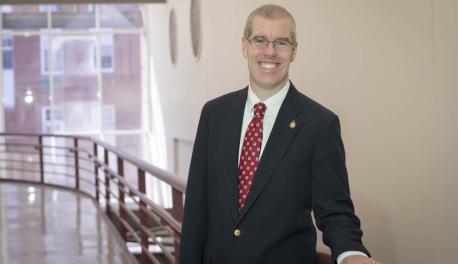
Hossein Hakim, left, and Bob Voss hope that giving incoming students free passports will make clear WPI's committment to leading the way in global technological education.
Having a passport can "open the door to the greatest experience in a student's life," says Hossein Hakim, associate professor of electrical and computer engineering and director of the Global Studies Program. "What we offer is not the typical international experience," he says. "The nearly 200 WPI students who will travel overseas this year will act as consultants to organizations that have asked us to help them solve a problem. This is experimental learning applied to international education."
Once on the ground in one of the 17 countries where WPI runs project programs, students work in teams on projects for nonprofit agencies, government organizations or corporations. They shae apartments or live in student housing, cooking local food to keep expenses down. They spend seven weeks defining and responding to the issues presented to them, finishing up with a presentation to their sponsors and a detailed project report. Most projects satisfy the requirements for the Interactive Qualifying Project (IQP), which asks students to examine the impact of technology on society.
Recent projects include a market research study for an ecotourist site in a Costa Rican rain forest, a study of the feasibility of using solar energy in a Danish high school, and the development of a graphical database of outdoor art in Venice. THe effects of this international experience is long-lasting. Students return with a changed outlook on their lives and, often, their potential careers.
"Although every day is somewhat of a struggle, and I have none of the comforts of home," wrote Luke Poppish '98 from Coimbatore, India, in the spring of 1997, "the fact is, I wouldn't trade this journey for the world. I will look at things in a different light when I return to Worcester."
"Students who go overseas are seen as risk takers, more adaptive, able to deal with ambiguities, and as experienced team players," says Hakim. "They prove they can write lengthy reports and make oral presentations to people they've never met." Their international experiences set them apart from other job candidates, he says, since they're more prepared to live and work in a global society.
As more and more students and faculty return to Worcester energized from their exposure to new ways of thinking and living, WPI will retain its undisputed leadership position in global education. More important, the campus atmosphere will become one of greater understanding of the variety of cultures and perspectives in the world beyond Worcester.
Allison Chisolm