A STEAM Teacher, Scientist, and Graduate Student at WPI’s MS in Integrated STEM Education
It’s been a full year since the Master’s in Integrated STEM Education (MISE) program was launched. We reached out to one of the program’s graduate students (and STEAM teacher), Amanda Gallerani, to learn how she manages full time teaching and graduate studies, and what advice she may have for potential candidates.
From Marine Science to the STEAM Classroom

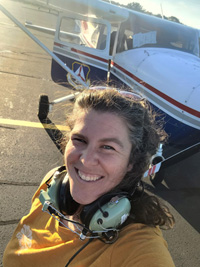
Amanda Gallerani is a K–3 STEAM teacher at Taft Early Learning Center in Uxbridge Public Schools. Before entering the classroom, she studied marine biology and worked at the New England Aquarium.
Amanda brings real world science to her students: She conducted experiments during the 2024 total solar eclipse aboard a Civil Air Patrol flight, and lead the Trout in the Classroom project, where students raise and release fish into a local pond. This year, Amanda received the Blackstone Valley Promising Practice Award for a district-wide collaborative project. She founded “Science with Amanda”, a community-based STEM outreach program.
Q: What was your path into teaching?
A: Before entering the classroom, I worked with the New England Aquarium, teaching marine science across the Northeast and helping students connect with the natural world. That experience sparked my passion for science education, breaking down barriers, and showing students they belong in STEM. Family and friends often commented about my ability to inspire learning. Following the pandemic, I began teaching third grade remotely, then transitioned into a STEAM role when my school’s technology teacher retired. I helped design and launch the Uxbridge STEAM program, where I now create hands-on STEM learning experiences that continue to grow and evolve.
Q: What do you enjoy most about teaching STEM?

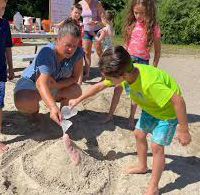
A: Teaching STEM allows me to create the kind of hands-on, innovative learning experiences I once wished for as a student—now in the same elementary school I attended. STEM is creative and engaging, and I love seeing students gain confidence as they tackle authentic challenges and think like scientists and engineers. My goal is to help students leave elementary school with curiosity, confidence, and a strong foundation for future STEM learning.
I also enjoy connecting students across grade levels. I recently created a district-wide project where elementary students acted as the “clients,” and shared their ideas with middle school students, who developed design blueprints, to be built by high school students.
Q: Why did you apply to the MISE program? What were you looking for in a graduate program?

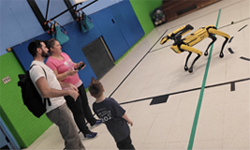
A: I applied to the MISE program because I wanted a graduate program with a strong STEM focus that would help me innovate my teaching and prepare students for a rapidly changing future. I was looking to deepen my understanding of integrated STEM, explore new instructional strategies, and continue developing the STEAM program I created in Uxbridge and my Science with Amanda organization. The online format provided the flexibility I needed to balance graduate study with my teaching responsibilities.
Q: What have been some highlights of the MISE program so far?
A: One of the highlights of the MISE program has been connecting with other STEM educators and building a professional learning community. As the only STEAM teacher in my district, collaboration has been invaluable. In addition, the MISE courses are interactive, collaborative, and student-driven, mirroring the kind of STEM classrooms I strive to create. The program emphasizes active learning, problem-solving, and real-world application, which keeps the coursework engaging and directly relevant to my teaching.
I also appreciate the flexible online format, discounted tuition, and highly applicable coursework like science storylines and using AI in education, which make the program both accessible and impactful. I often integrate my coursework into my teaching whenever possible, applying new strategies or ideas directly in the classroom, which makes the learning feel immediate and relevant.
Q: What would you say to educators considering a graduate program but concerned about the time or the online format
A: I would tell them that a program like MISE makes graduate study achievable. The flexible online format lets you work at your own pace, and the coursework is immediately applicable to classroom practice. You gain practical strategies, a supportive STEM-focused community, and flexible instructors who want you to succeed. Time management and organization are key, but the investment benefits both you and your students.
Q: Lastly, what do you enjoy doing when you are not teaching or working on your grad courses?
A: Outside of teaching and graduate coursework, I enjoy outdoor adventures, ocean activities, and community service. I volunteer in marine wildlife rescue and research, lead community STEM programs through Science with Amanda, and support local nonprofit initiatives. Staying active and connected to science, community, and exploration fuels the passion I bring back into my classroom. When I’m not volunteering or teaching, you can often find me traveling, flying planes or drones, or heading out on my next adventure.
Inspired by Amanda’s story?
Register for an upcoming MISE Info Session.
- Wednesday, April 15, 4:00–4:45 p.m. (ET)
- Thursday, May 7, 4:00–4:45 p.m. (ET)
Summer Applications Deadline is June 1
Questions? Contact Mia.