

Seminar Series
A Bioinspired Enzymatic Carbon-Negative Structural Material

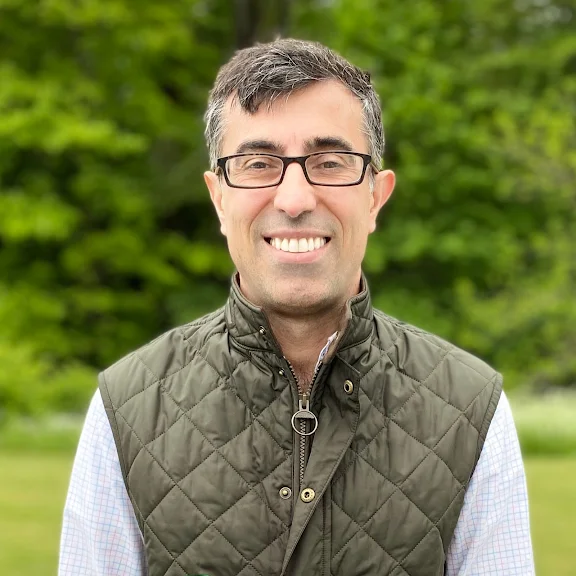
Nima Rahbar, PhD
White Family Distinguished Professor
WPI Department of Civil and Environmental Engineering
Monday, November 20, 2023
Gateway Park, Room GP 1002
12am-12:50am
ABSTRACT: The United Nations has declared climate change as the defining issue of our time. We are at a crucial moment as we witness shifting weather patterns threatening global safety and health. Concrete is the most widely used material in the world, and its production and transport are responsible for 8% of global carbon emissions. It is inherently brittle and requires frequent repair or replacement, which are expensive and generate large volumes of CO2. Therefore, a self-healing cement paste is needed to overcome this problem. The leading self-healing mechanism uses spores, bacteria, and microbes, which are slow and have limited applications and unknown health effects. Inspired by the highly efficient process of CO2 transfer in biological cells, this talk introduces a method to develop a self-healing mechanism in a cementitious matrix using trace amounts of the enzyme Carbonic Anhydrase (CA). CA catalyzes the reaction to create calcium carbonate crystals with similar thermomechanical properties as the cementitious matrix. The crystal growth rate using this method is orders of magnitude faster and more efficient than bacterial methods, resulting in the healing of significant flaws on timescale orders of magnitude shorter. This inexpensive method is biologically safe, actively consumes CO2, and avoids using unhealthy reagents. Our enzymatic mechanism led to the development of the carbon-negative Enzymatic Construction Material (ECM), providing a new pathway to substitute concrete. Moreover, ECM production can be a viable carbon sequestration method.
BIOGRAPHY: Dr. Rahbar received his Ph.D. in Mechanics, Materials, and Structures in the Department of Civil Engineering at Princeton University. He joined WPI in August 2012 as an Assistant Professor after starting his career at UMass Dartmouth. His research interests mainly focus on the bioinspired design of materials, emphasizing mechanical and thermal properties. Dr. Rahbar has won several awards, including the NSF CAREER award in 2012, the TMS Young Leader’s Award in 2013, the Air Force Summer Faculty Fellowship Award in 2013, the Consecutive ASCE 2015 and 2016 Outstanding Reviewer, 2018 Sigma Xi Outstanding Junior Faculty Research Award, 2020 and 2022 ONR Summer Senior Faculty Fellowship. He was a visiting associate professor at the MIT CEE Department in 2019 and Cornell CEE in 2020. His latest work is focused on Negative Emission Structural Materials and zero friction metallic surfaces.
For a zoom link, please email jnorton@wpi.edu or kharrison@wpi.edu