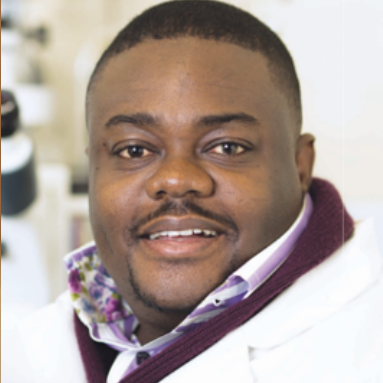
Man wearing a white sport coat sits in a hallway.

Solomon Mensah

Training Undergraduate Researchers

NIH funding supports students in Solomon Mensah’s lab who are researching sepsis-induced blood clotting
September 22, 2026

WPI researcher Solomon Mensah has been awarded a three-year grant of $532,935 from the National Institutes of Health (NIH) to provide research experiences to undergraduates who will work on projects determining how sepsis, a life-threatening infection, can trigger severe blood clotting.

Mensah, an assistant professor in the Department of Biomedical Engineering, will offer students opportunities to do course-related research projects, individual research work, and Major Qualifying Projects, capstone projects that all WPI undergraduates must complete to graduate. The goal of the research is to determine the molecular mechanisms that link sepsis-induced inflammation to clotting that can potentially block blood vessels and lead to stroke.

“As a first-generation student from Africa, I benefitted academically and professionally from mentors,” Mensah says. “Mentors guided me as I prepared for doctoral studies and shaped my path as a researcher. I want to pay these experiences forward to students by mentoring them and offering them meaningful opportunities to conduct research.”

Sepsis is a systemic infection that causes widespread inflammation and dysfunction in the body, including damage to the endothelial cells that line blood vessels.

Beginning Quote Icon of beginning quote
These projects supported by the NIH provide excellent training for students while also advancing fundamental understanding of human health. Beginning Quote Icon of beginning quote
  • Solomon Mensah
  • Assistant Professor, Department of Biomedical Engineering

Mensah’s team will define the molecular mechanisms that degrade glycocalyx, a protective coating on healthy endothelial cells, during a systemic infection. They also will identify components that ordinarily tether a protein called von Willebrand factor to healthy endothelial cells. During infection, von Willebrand factor detaches from endothelial cells, circulates in the blood, and recruits blood cells known as platelets, which can drive the development of clots. Finally, Mensah and student researchers in his lab will determine if it is possible to rescue a damaged glycocalyx barrier, a step that could pave the way for sepsis treatments.

The project builds on Mensah’s research into the role of the glycocalyx in heart and lung disease. Mensah is a fellow of the American Heart Association and has worked on the development of low-cost medical devices for healthcare in low- to middle-income countries.

The project is one of several new research initiatives launched at WPI with funding from the NIH’s Academic Research Enhancement Award program, which supports research training for undergraduate students. Mensah expects his award will provide research opportunities to 12 WPI undergraduates.

“These projects supported by the NIH provide excellent training for students while also advancing fundamental understanding of human health,” Mensah says. “The work will establish an educational pipeline at WPI, enabling us to train students in biology and train the next generation of biomedical engineers.”

Natalie Farny
Explore NIH-funded research at WPI

Fighting Lead Poisoning

To reduce lead poisoning, researchers in the lab of Natalie Farny are turning to tiny worms with a taste for bacteria.

Catherine Whittington
Explore NIH-Funded Research at WPI

Understanding Fibroids

Catherine Whittington's lab models point to clues about fibroids.

Jagan Srinivasan
Explore NIH-funded research at WPI

Brain Circuits and Sex Differences

Tiny worms are helping Jagan Srinivasan illuminate why behaviors differ by sex.

Dirk Albrecht
Explore NIH-funded research at WPI

A New Model for Brain Injury

Dirk Albrecht is aiming to identify treatment pathways that promote recovery.

Keep Up With WPI Research News

Want to learn more about Research at WPI? Subscribe to the monthly newsletter.


Offices and Departments

Profiles