Actuarial Mathematics
Title: Copula Modeling: An Application to Workers' Compensation Claims
Students: Alison Lambert (MAC), Donovan Robillard (MAC), Lexi Ferrini (MAC)
Advisors: Jon Abraham (MA), Barry Posterro (MA)
Sponsor: Hanover Insurance Group
Academic Year: 2021-2022
Copulas are multivariate probability distributions used in the modeling of multiple random variables. In insurance, they are used to create models that preserve the relationship between a claim’s loss amount and any associated expenses, especially in large loss scenarios. The goal of this project was to develop a copula model for losses and their associated expenses and determine whether their use produces different results than current modeling methods. Through data analysis and simulation, the team identified that a copula model could be applied to claims in Workers’ Compensation. It was found that the copula model did not produce significantly different results than those produced using the sponsor’s traditional methods, validating their current models.
Title: Improving Ratemaking Profitability Using Auction Theory
Students: Josiah Aranovitch (MAC), Jose Salvador Aldana Pla (MAC), Macayle Wells (MAC)
Advisors: Jon Abraham (MA), Barry Posterro (MA)
Academic Year: 2025-2026
This project presents a more in-depth method for maximizing profits of ratemaking using auction theory. The goal of this project is to determine a refined way to maximize insurance companies' profits in closed-bid auctions. Specifically using a triangular kernel distribution, shifted and non-shifted, along with a normal distribution to estimate opposing companies' bids. Previous work used a uniform distribution with equal likelihood for all bids, regardless of the initial evaluation. We present what we believe to be a more realistic solution.
Analysis
Title: Unique and Stable Determination of a Crack in a Half Space Governed by Laplace’s Equation
Student: Karl Ramus (MA/RBE)
Advisor: Darko Volkov (MA)
Academic Year: 2024-2025
In this paper, we consider a solution to Laplace's equation in a specific domain; namely, a half space with a crack. This crack is represented as a line segment below the x-axis, across which there is a jump in function value. This jump itself varies along the crack, but is assumed to be fully supported over the crack, as otherwise there would effectively be no crack. The question we seek to solve: given some measurements of our function along the boundary- i.e. along a subset of the x-axis, can we uniquely determine the location of the crack? The answer to this turns out to be yes. In addition, we prove that the error in this determination is linearly bounded above. In more mathematical language, the determination of the crack is proved to be Lipschitz stable.
There are some applications to this; Laplace’s equation is used frequently in physics to model
vector fields, especially electromechanical and gravitational fields, as well as for modeling fluids with irrotational flow. In this case, the most pertinent application is for earthquakes- given some readings of the earthquakes magnitude on the surface of the earth, we show that it’s possible, assuming that the crack is linear, to uniquely determine it’s location with some confidence with regard to error. Similarly, after this work is extended to the Helmholtz equation, we could also use it to detect cracks in materials, by placing a regular vibration source on one end of the material and observing the resulting steady state vibrations from a different location on the same side.

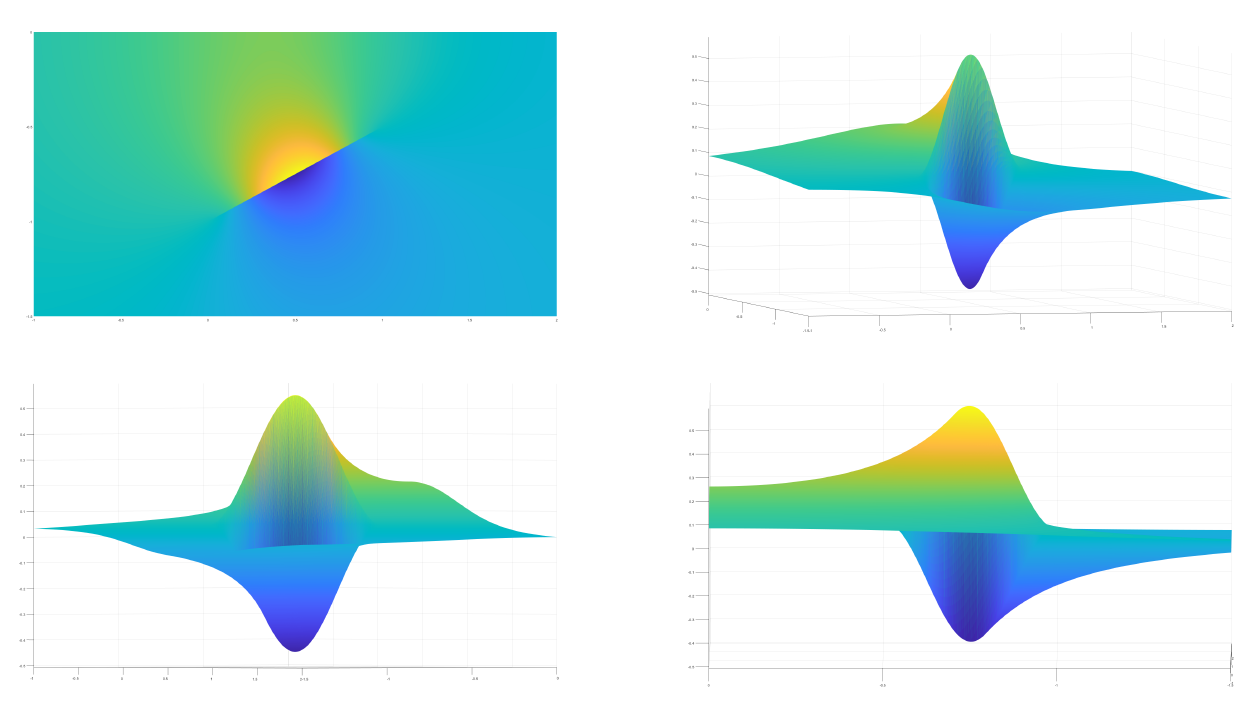
The above project received an MQP Departmental Honorable Mention for Mathematical Sciences, 2024-2025
Title: Stability Properties of a Crack Inverse Problem in Half Space
Student: Andrew Murdza (MA)
Advisor: Darko Volkov (MA)
Academic Year: 2019-2020
This project focuses on the analysis of a partial differential equation model relevant in the field of geophysics where sensors can capture seismic and displacement data. The question studied involves whether the geometry of faults, total slip between plates, and accumulated mechanical stress can be determined given data that results in an overdetermined system.
Applied Mathematics
Title: Magnetic Imaging of Current Flow in MXenes Using Quantum Sensors
Students: Sona Hanslia (PH), Camille Williams (PH/MA)
Advisor: Raisa Trubko (PH), Kateryna Kushnir Friedman (PH), Vadim Yakovlev (MA)
Academic Year: 2024-2025
MXenes are a class of low-cost two-dimensional (2D) transition metal carbide, carbonitride, and nitride materials with exceptional electronic, optical, chemical, and mechanical properties. They have high electrical conductivity, offer exceptional strength and stiffness, are biocompatible, and have scalable synthesis methods. As such, they have enormous promise for revolutionizing energy storage, smart textiles, flexible electronics, medicine, 5G/6G communications, ultra-fast sensors, and more. The electrical conductivity of MXenes is influenced by their chemical composition, the configuration of their surface terminations, and the physical MXene geometry. Additives, coatings, or defects in MXenes can be used to tune their electronic properties. It is therefore critical to understand the spatial current flow dynamics in different MXenes. In this work, a combined experimental and computational approach was applied to spatially resolve current flow in MXenes. Quantum sensors was used to image magnetic fields generated from electric current flow through Ti3C2Tx MXenes. Specifically, nitrogen-vacancy (NV) centers in diamond were used to collect vector magnetic field data with micron-scale spatial resolution. A procedure based on the spectral inversion of Biot-Savart law was implemented to reconstruct the current density from the magnetic field. This approach was used to study (i) current flow through pure MXene samples with different geometries and physical defects, (ii) a MXene sample composed with sodium tripolyphosphate (TPP) for stability, and (iii) a MXene sample composed with silk fibroin (SF) for biocompatibility. The data showed that current flowed around physical defects, that the addition of TPP did not fully compromise current flow, and that textured current density was present in the MXene and SF composite material. These results demonstrated a new application for NV diamond magnetometry to study current flow in MXenes. This new robust technique for high-resolution current imaging in MXenes can be used to aid in the future engineering of spatial current-flow dynamics or detection of micrometer-scale defects in MXenes.

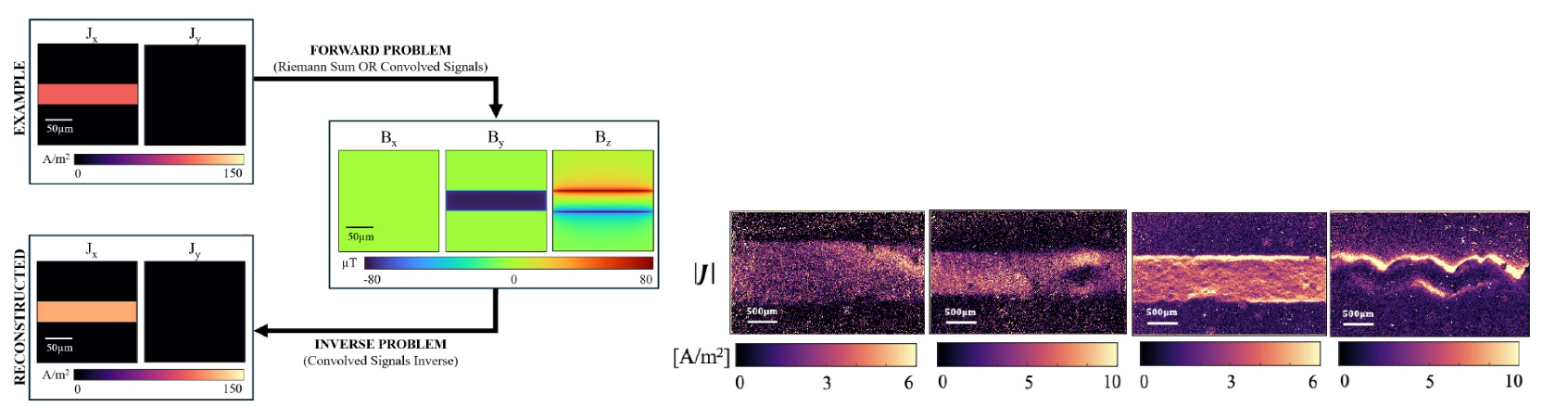
The above project won the Provost's MQP Award for Mathematical Sciences, 2024-2025
Title: Equivalent resistances in finite and infinite dual graphs
Student: Lil Peeler (MA/ECE)
Advisor: Brigitte Servatius (MA/BCB), Mostafa Asheghan (ECE)
Academic Year: 2024-2025
The tools of topological graph theory offer insight into the analysis of resistor networks induced by planar graphs and their duals. A study of self-dual maps in particular and their associated resistor networks demonstrates the inherent connection between graph theory and electrical network analysis. In this paper, we define the resistor networks induced by planar graphs, analyze their equivalent resistance properties, and explore self-duality in relation to electrical networks. Finally, we consider the extension of a result concerning the equivalent resistances of finite dual graphs to the infinite case.

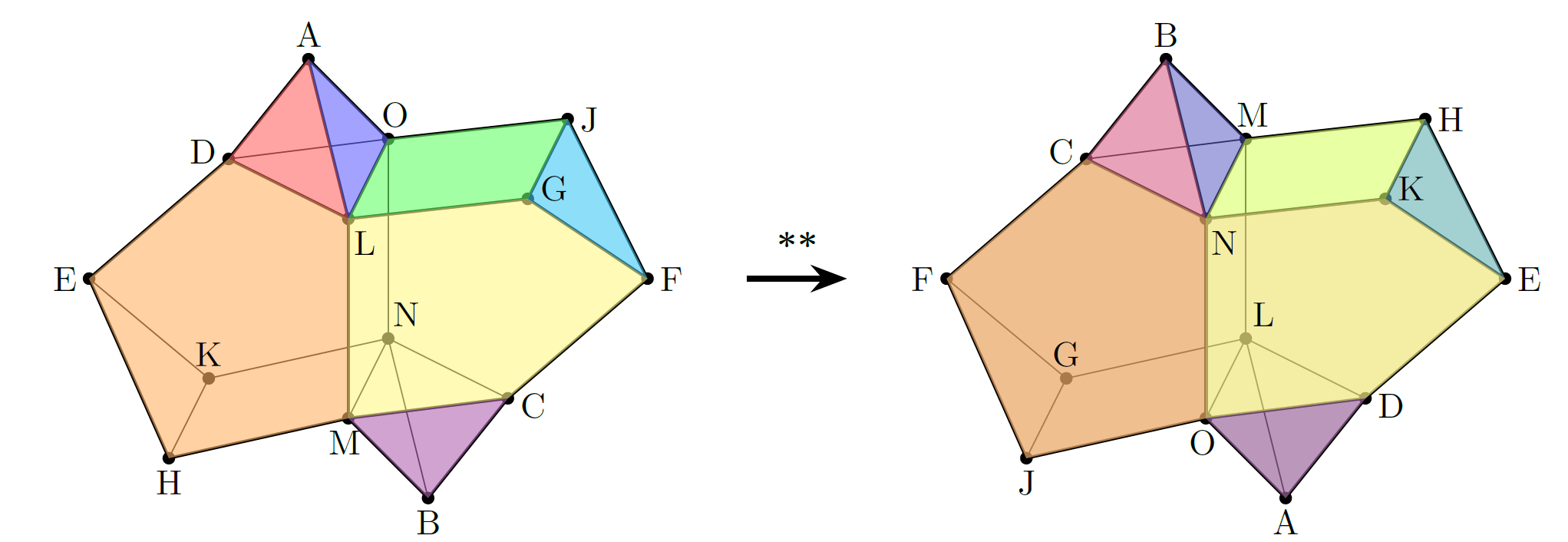
The above project was awarded the MQP Departmental Honorable Mention for Mathematical Sciences, 2024-2025
Title: Optimal Defect Layer Position in Electromagnetic Energy Absorbers
Student: Zachary W. Adams (MA)
Advisor: Burt Tilley (MA/ME), Vadim Yakovlev (MA)
Academic Year: 2024-2025
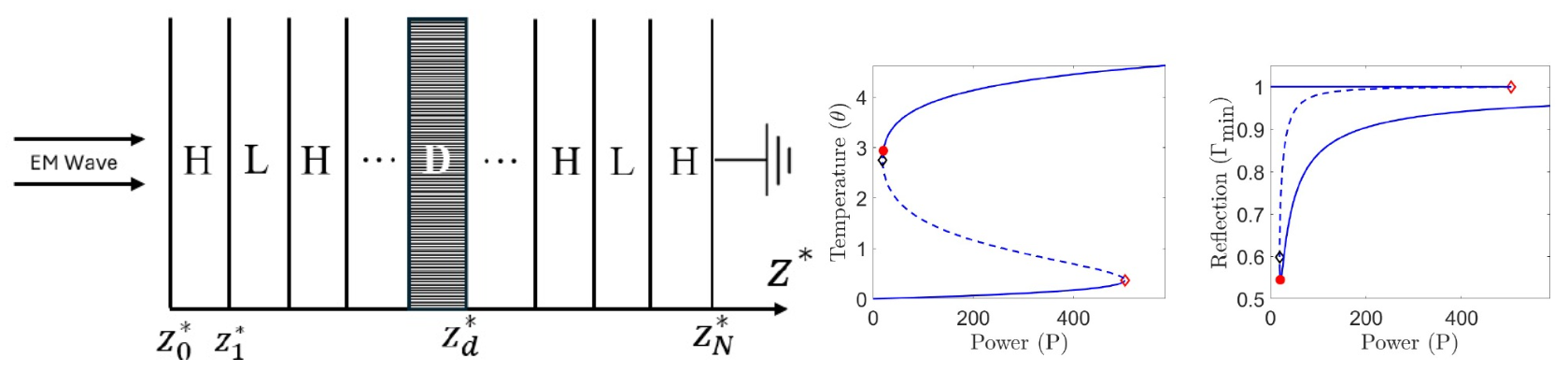
Beamed energy applications use susceptors to absorb applied electromagnetic radiation and convert it to heat, which can be used to produce useful work. This project considered a susceptor made of a composite material, composed of alternating high and low-permittivity layers. It explored the effects of wave-geometry interactions in this material on energy transmission to the heat exchanger. It was demonstrated that these interactions can be controlled, and reflection at the heat exchanger surface can be minimized by varying only relative layer width and free-space wavenumber. The proposed approach works for both idealized and practical material parameters.

Title: Development of a Symplectic RKF Scheme for Integration of the Geodesic Equations on a Manifold with Applications to General Relativity
Student: Bernard Ymeri (MA/PH)
Advisor: William Sanguinet (MA)
Academic Year: 2025-2026
This project develops a method for the integration of geodesic equations on a manifold. The numerical method compares various symplectic high order Runge-Kutta steps to accurately approximate geodesic flow. Inspired by a previous geodesic integrator by Christian and Chan named FANSTASY, Python code was written to conduct similar simulations using this new method. The code was initially tested on simpler surfaces, obtaining geodesics on cylinders, spheres, and the torus. The code was then used to simulate geodesics around Schwarzschild and Kerr black holes.

The above project was awarded the Provost’s Award for Best MQP in Mathematical Sciences, 2025-2026
Computational Biomechanics
Title: A Marker-Point Model for Simulation of Elastic Surface Deformation
Student: Kamryn P. Spinelli (MA)
Advisor: Min Wu (MA)
Academic Year: 2020-2021
This project developed a higher-accuracy method to simulate the deformation of rotationally-symmetric surfaces such as plant cells. Such a model increases computational efficiency and could be used to better understand how plant cells grow or how deformation can encourage diffusion on the cellular or nuclear level. The project incorporates elements of numerical analysis and differential geometry.
Discrete Mathematics
Title: AI-in-the-Box: Generating Snake-in-the-Box Constructions with AI
Student: Chase Carstensen (CS/MA)
Advisors: Daniel Reichman (CS), Gabor Sarkozy (CS)
Academic Year: 2025-2026
The snake-in-the-box (SIB) problem involves finding the longest induced path in an $n$-dimensional hypercube graph. Recent advances in machine learning and artificial intelligence have prompted mathematicians to experiment with using these tools to assist in solving problems in mathematical research. This work provides the first application of neural network-based methods to the SIB problem, using existing frameworks such as the Deep Cross-Entropy Method (DCEM) and PatternBoost. Restricted search variants, which guarantee snake validity by construction, uniformly outperformed simple searches that permitted invalid chorded paths. PatternBoost recovered optimal snakes for dimensions $n\leq7$ and found a snake of length 95 in dimension 8, reaching within 3 edges of the known optimum. However, results in dimensions $n\geq9$ show a widening gap between achieved results and current lower bounds, suggesting that general-purpose neural methods struggle with convergence to local optima and computational bottlenecks during the local search phase. These findings indicate that advancing the state of the art for the SIB problem may require alternative AI approaches or significant domain-specific engineering.
Title: Exploring the Game of Cycles
Student: Kendall Snyder (MA)
Advisors: Brigitte Servatius (MA/BCB)
Academic Year: 2025-2026
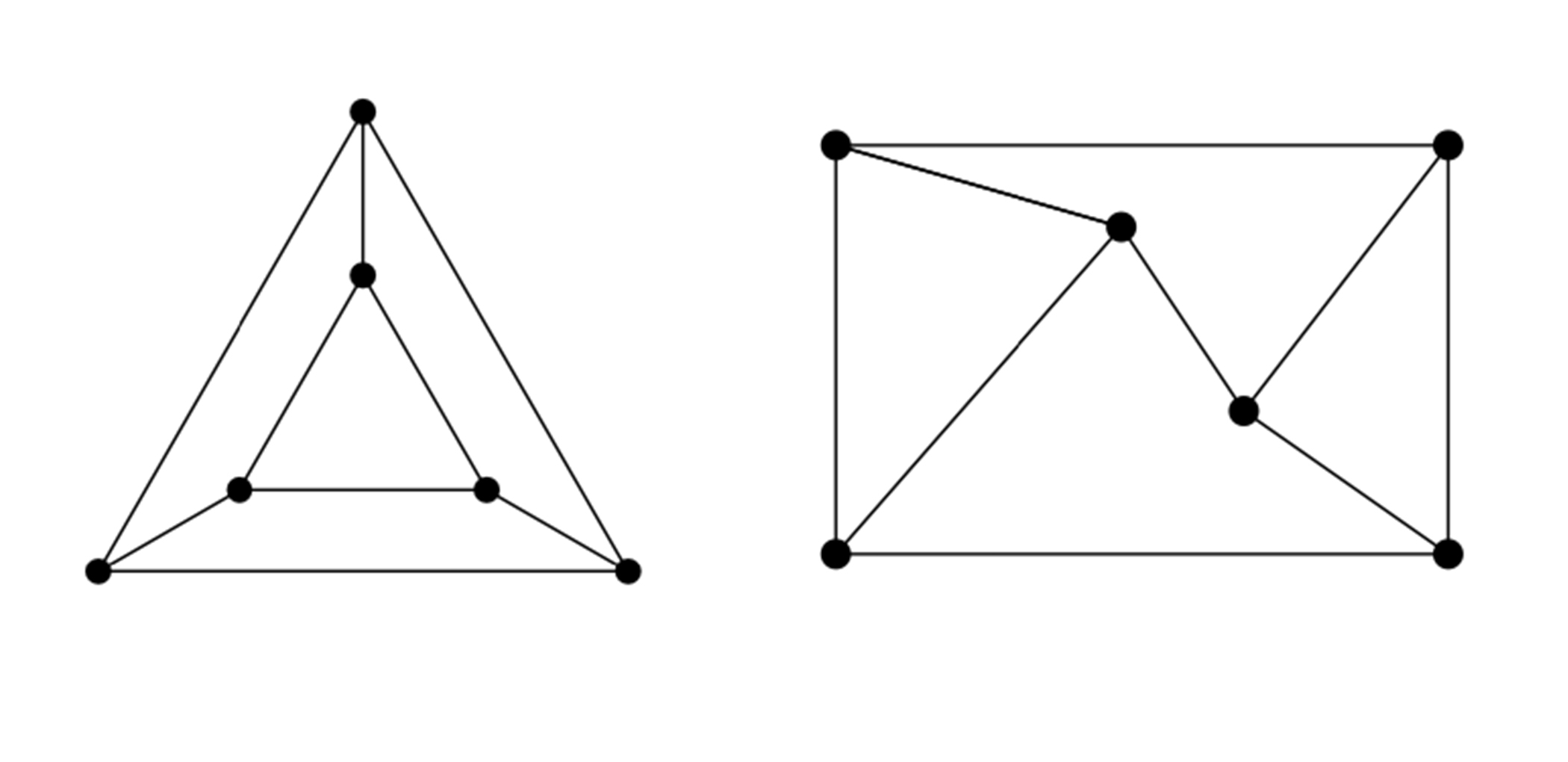
Since Francis Su introduced the Game of Cycles in 2020, several interesting mathematical results have been established. Notably, the mirror-reverse strategy helped find winning strategy on many classes of symmetric game boards. In this work, we show this strategy can be used on low-symmetry boards if the underlying graph exhibits symmetries, such as some planar embeddings of the triangular prism. To find winning strategy on more complicated boards like these, an investigation of the commonly cited, but seldom understood Zermelo’s Theorem is conducted via proof. Finally, Zermelo’s ideas give way to an examination of game trees as a tool for finding winning strategy.
A preliminary version of this research was presented at the national Pi Mu Epsilon annual meeting (JMM) in 2026 and won a `Student Speaker Award. Read more here: https://pme-math.org/slider/2026-pme-student-speaker-award-winners

Title: Theta Invariant for Virtual Knots
Student: Tyler Mitchell (MA), Adam Mullaney (MA)
Advisors: Samuel Tripp (MA)
Academic Year: 2025-2026
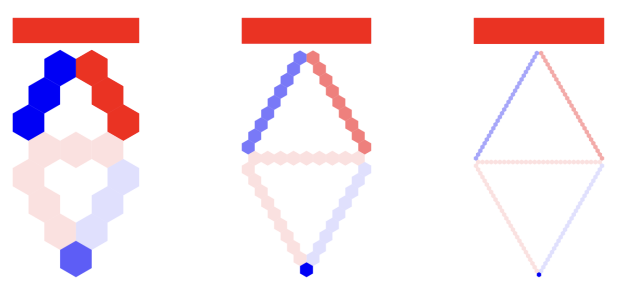
In a recent paper, Bar-Natan and Van der Veen define the Theta invariant of knots, consisting of a pair of Laurent polynomials. In this project, we investigate the Theta invariant as it applies to long rotational virtual knots. Namely, we construct two interesting families of long rotational virtual knots: one for which all members have distinct Theta but whose closures are the same virtual knot, and one in which all members have the same Theta yet whose closures are distinct virtual knots.

The above project received the MQP Departmental Honorable Mention for Mathematical Sciences, 2025-2026
Financial Mathematics
Title: Deep Learning for Reflected Backwards Stochastic Differential Equations
Student: Frederick "Forrest" Miller (MA/DS)
Advisors: Stephan Sturm (MA/DS)
Academic Year: 2022-2023
In this work, we in investigate the theory and numerics of reflected backwards stochastic differential equations (RBSDEs). We review important concepts from stochastic calculus, as well as key theoretical properties of (R)BSDEs. We provide an overview of feedforward neural networks and their applications to functional approximation for numerical implementations. We also discuss the key application of RBSDEs to the field of mathematical finance, in particular indifference pricing of put options. Lastly, we present preliminary theoretical and numerical results of Risk Indifference pricing of American from both the Buyer’s and Seller’s perspectives.
Title: The Undervalued Variable: A Dynamic Approach to Risk Aversion in Lifecycle Portfolio Optimization
Students: Gianni Perea (MAC), Dylan Leung (MAC), Dmitriy Kim (MAC)
Advisors: Jon Abraham (MA), Barry Posterro (MA)
Academic Year: 2025-2026
Paul D. Kaplan’s and Thomas M. Idzorek’s findings in “The Importance of Joining Lifecycle Models with Mean-Variance Optimization” demonstrated the importance of integrating lifecycle models with mean-variance optimization. They argued that optimal risky asset allocation should be scaled by an investor's total wealth, including not only financial assets (F), but also human capital (H). While their framework allows for investor-specific risk aversion, the parameter λ is treated as a fixed input. An input assumed to be found once for a specific investor and stay constant over time; independent of the changing wealth components that drive the model. We argue this is a critical gap. As an investor's financial wealth accumulates and their human capital evolves over the lifecycle, their effective tolerance for risk should respond accordingly. Drawing on foundational theory from mean-variance optimization, the Capital Asset Pricing Model, and single-index models, and more necessary background, we propose a functional form for λ that is directly tied to F and H and of course the investor’s age. Our framework captures the intuition that risk tolerance is not a personal constant; it is shaped by the level, composition, and relative stability of total wealth. We show that treating λ as dynamic and wealth-dependent affects optimal portfolio allocations and provides a more theoretically consistent and practically relevant extension of Kaplan and Idzorek’s lifecycle-MVO framework.
Financial Statistics
Title: Analyzing the Dynamic Relationship Between Intraday Trading Activity and Volatility Using High-Frequency Data
Students: Emily Baker (MA), Ryan Candy (MA), Isadora Coughlin (MA)
Advisors: Fangfang Wang (MA), Jian Zou (MA)
Academic Year: 2020-2021
Measuring equity volatility is an important metric and understanding, describing, and predicting volatility using trading activity provides insight into navigating the stock market. Taking inspiration from existing research analyzing volatility in the stock market, we explore the dynamic relationship between trading volume, trading frequency, and volatility on an intraday basis across ten stocks in the consumer discretionary sector of the S&P 100 for the fourth quarter of 2013. Using three different volatility measures we implement variations of the heterogeneous autoregressive model and vector autoregressive model to investigate the lead-and-lag relationship between volatility and trading activity. Our quantitative analysis provides strong empirical evidence that current trading frequency and trading volume can be used to predict 30-minute measures of volatility and that the prior day rolling average and lagged trading measures are useful predictors in modeling the volatility measures.
FinTech
Title: Green Future Wealth Management - Sustainable Investments Return and Risk Expectations
Students: Trajan Espelien (CS/MA), Brandon Lui (CS), Humza Qureshi (DS), Vu Le (CS/DS), Andrew Kovacs (FT)
Advisors: Matthew Ahrens (CS), Marcel Blais (MA), Kwamie Dunbar (BUS), Daniel Treku (BUS/DS)
Sponsor: Green Future Wealth Management
Academic Year: 2024-2025
This project, conducted on behalf of Green Future Wealth Management, focused on developing an application to help investors identify stocks that fit their ESG (Environmental, Social, Governance) values. The team used the Agile Scrum methodology in building the application which features data science to filter the stocks, the Markowitz mathematical framework to manage risk, Tableau to visualize individual company performance, and a JS React & Python Django technology stack. The team successfully integrated investment methodologies and considered investor’s ESG values in recommending an investment portfolio. The project lays a strong foundation for a future integration with the Apex Fintech API to allow for investors to manage real portfolios directly on the platform.
The above project was awarded the Provost’s Award for Best MQP in Data Science, 2024-2025
Title: GraphRAG vs. RAG: A Comparative Evaluation of LLM Performance
Students: Anna Balin (MA/CS), Andrew Cash (CS), Roberto Sabater (ECE), Inaya Siddiqui (MA), Katie Strogach (CS)
Advisors: Shamsnaz Bhada (ECE/SE/SSPS/IMGD), Marcel Blais (MA), Wilson Wong (CS)
Sponsor: A New York-Based Alternative Investment Company
Academic Year: 2024-2025
The increasing complexity of data in alternative investing demands innovative solutions. The industry sponsor currently employs Retrieval-Augmented Generation (RAG) for information retrieval and document ingestion in their AI chatbot. While effective, RAG struggles to answer complex queries requiring synthesis across documents. To address this, we evaluated Microsoft’s GraphRAG, which utilizes knowledge graphs to achieve more sophisticated reasoning and contextually relevant responses. We extensively tested and evaluated RAG and GraphRAG across multiple datasets provided by TPG Angelo Gordon using DeepEval, an open-source LLM evaluation framework. Results were synthesized using Snowflake and SnowSQL and visualized in Power BI.
Machine Learning
Title: Scaling Diffusion Models to Large Sparse Graphs
Students: Gia Hien Pham (CS/MA), Weaver Goldman (CS), David Dechantsreiter (DS), Botao Hu (CS)
Advisors: Oren Mangoubi (MA/DS/AI/CS), Fabricio Murai (DS)
Academic Year: 2025-2026
Generative modeling for graph-structured data is critical for advancing fields ranging from drug discovery to social network analysis. However, scaling these models to large graphs remains a significant challenge. Existing graph diffusion models treat graphs as dense adjacency matrices, explicitly modeling all possible edges. Consequently, this leads to prohibitive quadratic computational complexity (O(n^2)), restricting most current models to small graphs with only a few hundred nodes. This project addresses this scalability limitation through two distinct contributions. First, we introduce Scale-MGD, which applies masked discrete diffusion directly to a sparse edge-list representation using a GNN-based architecture, achieving linear memory complexity (O(n + m)). Second, we introduce SparserDiff, a memory efficient adaptation of an existing method (SparseDiff) that reformulates the original forward noising process to avoid materializing the full set of non-existent edges. Scale-MGD exhibits better scalability, than all prior models, however struggles with generation fidelity. SparserDiff generates high-fidelity graphs, much like its predecessor SparseDiff; however, it does not scale as well as Scale-MGD. Finally, we introduce RedditWalk, a new large-scale benchmark derived from the Reddit Hyperlink Network, enabling variable-size graph generation that preserves structural characteristics across scales. Furthermore, we evaluate SparserDiff on three sampled datasets from RedditWalk, demonstrating the potential of the RedditWalk dataset as a benchmark for large-scale graph generation.
Title: Discovering User Patterns: The Role of Behavioral Clustering in Re-engagement Modeling
Student: Abhiram Yammanuru (DS), Dan Nguyen (CS), Duyen Le (MA), Era Kalaja (CS), Maria Anastasia Masouti (DS)
Advisor: Randy Paffenroth (MA/DS/CS), Donald Brown (ECE)
Academic Year: 2025-2026
Global predictive models often assume that all users follow similar behavioral patterns, which can limit performance when meaningful differences exist across the population. In this work, we study how accounting for behavioral heterogeneity can improve prediction in a user re-engagement setting. We construct a scalable pipeline to group users into behaviorally meaningful segments using high-dimensional activity data, with an emphasis on ensuring that these segments are both structurally coherent and relevant to downstream tasks. We then train separate classification models within each segment and compare their performance to a single global model. Our results show that segment-specific models achieve higher precision-recall performance and improved targeting lift, indicating that modeling users within more uniform groups leads to better predictive outcomes. While motivated by a user re-engagement application, this approach provides a generalizable framework for improving performance and decision-making in heterogeneous systems.
Mathematical Biology
Title: Mathematical Modeling of the Neurovascular Unit Post Ischemic Stroke
Student: Madeline Gagnon (MA)
Advisor: Andrea Arnold (MA/BCB/DS/NEU)
Academic Year: 2025-2026
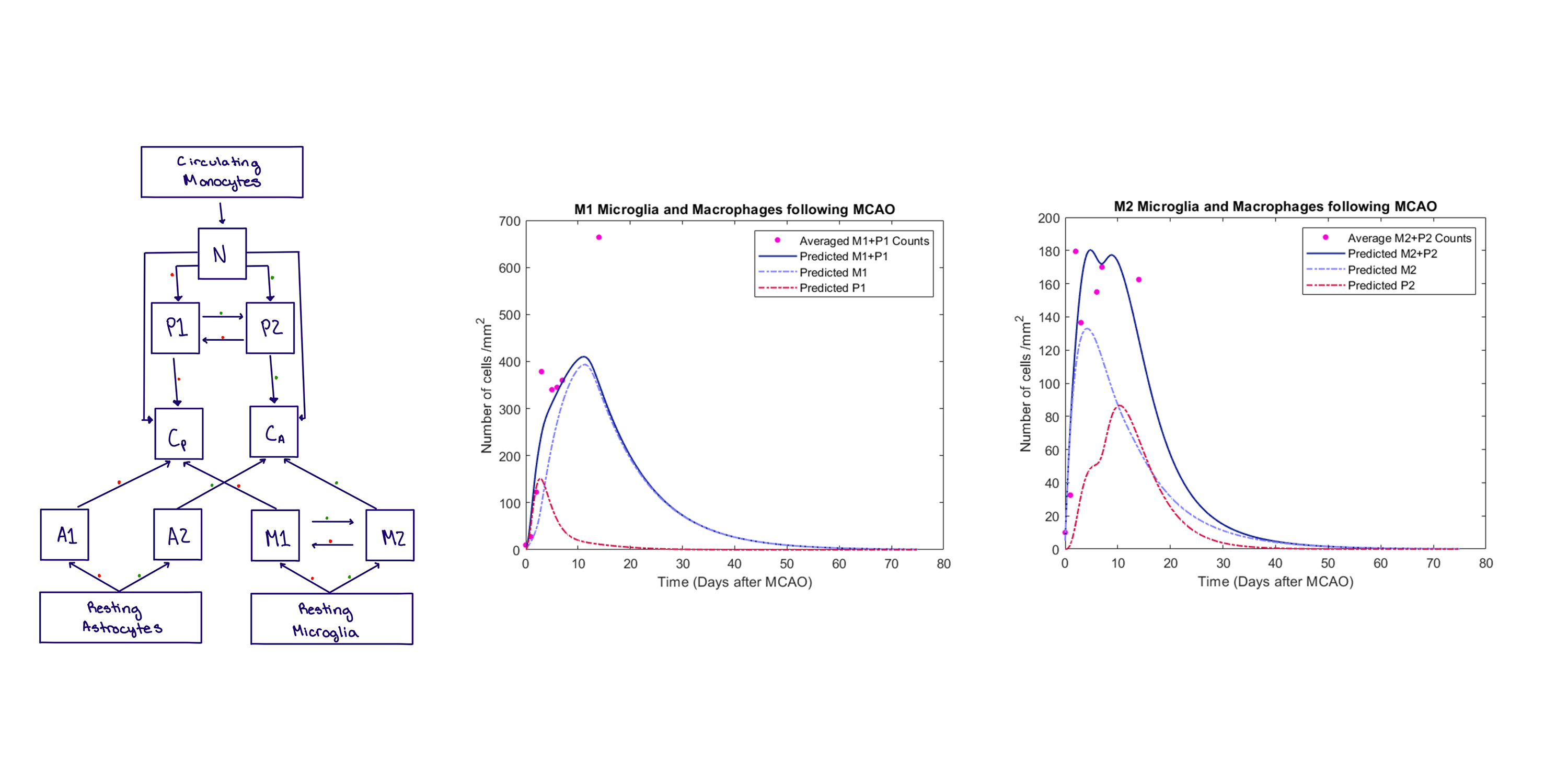
Stroke is a leading cause of death worldwide, and ischemic stroke is the most common type. Knowledge of the underlying cell dynamics and immune response following stroke is critical for developing treatment strategies. This research contributes two new mathematical models describing the dynamics of the activation of monocytes, macrophages, microglia, and astrocytes as well as cytokine production post ischemic stroke. We develop two systems, one linear and one nonlinear, of nine differential equations with compartments representing the pro and anti-inflammatory cell and cytokine types. Parameters are chosen to follow biological trends observed in experimental studies. The resulting models indicate that for most cell types the anti-inflammatory phenotypes peak early following stroke and then decline to a steady state, while pro-inflammatory phenotypes peak later before declining to a steady state. Macrophage cells are the exception and have opposite behavior. These models provide initial insights into the long-term glial and immune cell behavior after stroke.

Mathematical Epidemiology
Title: A Neural Network Emulator for Agent-Based Malaria Models: Extracting and Selecting Key Predictors for Malaria Incidence Over Time
Student: Aidan Henbest (DS), Floris Huiskers (MA)
Advisor: Charlotte Fowler (MA/DS/BCB), Stephan Sturm (MA/DS)
Academic Year: 2025-2026
While working with the Swiss Tropical and Public Health Institute, we extended prior work to develop a neural network emulator for their agent-based malaria model, OpenMalaria, which predicts various malaria outcomes based on defined parameters, historical time series data, and projected time series data. Emulators utilize the same inputs to make similar predictions, but are simpler, resulting in greater efficiency and interpretability. We propose a feature extraction and selection framework for the emulator that extracts various patterns from the given historical time series data and employs stochastic gates to determine which patterns and parameters are most integral for prediction. Additionally, we apply this framework to a malaria forecasting problem to validate its effectiveness. Specifically, we aim to predict the number of yearly malaria cases, which we refer to as incidence, for 2021–2025 based on certain malaria parameters, historical data from 2000–2020, and projected intervention data from 2021–2025. Malaria parameters that we utilize include monthly rainfall spread and distributions of mosquito species. Historical time series include past incidence, malaria treatment counts, and the previous coverage of various interventions. Many features are extracted from these historical time series, including, but not limited to, path signatures and Fourier transforms. When extracting these features, we also examine various lookback intervals to determine how far a model must consider the past to make accurate predictions of future malaria incidence. The models created with only the selected features have slightly improved loss compared to the models created with all extracted features based on the symmetric mean absolute percentage error metric. Additionally, the selected features are largely in line with our expectations for the simple goal of predicting yearly incidence. Furthermore, we find that, for this application, the lookback interval length does not substantially impact model performance. However, shorter lookback intervals were more stable in the feature selection phase. Overall, these results validate the performance of our feature extraction and selection framework, as prediction accuracy did not degrade when the model considered only the selected features.
Probability and Statistics
Title: Assessing the performance of an M-estimator for the SATE
Student: Avery Rabidoux (MAC)
Advisor: Adam C. Sales (MA/LS/DS)
Academic Year: 2025-2026
Attrition occurs when participants who start a study don't complete it, which can bias treatment effect estimates even in randomized controlled trials. GEEPERs is a method that accounts for attrition by incorporating attrition probabilities into the model. This study ran a simulation to evaluate GEEPERs relative to other models. The simulation varied sample size and assumption validity using real data from a high attrition educational intervention. When all assumptions held, GEEPERs did not outperform the other models. When other models’ assumptions did not hold, GEEPERs generally performed better. When all models’ assumptions were violated, GEEPERs performed the best when its violations were smaller. The other models performed better when the GEEPERs violations were more severe.
Scientific Computation
Title: Energy Preserving Neural Network for Liquid Crystal Problem
Students: Haoyan Zhong (MA/DS)
Advisors: Zhongqiang Zhang (MA), Guanying Peng (MA)
Academic Year: 2025-2026
Numerically solving the gradient flow systems is challenging: the energy landscape is strongly non-convex with numerous local minima, and methods without structural energy guarantees risk stalling at metastable configurations. Deep learning methods offer an alternative to classical numerical approaches, but direct applications such as physics-informed neural networks (PINNs) fail to preserve the inherent gradient-flow structure of the problem. In this work, we apply an energy-preserving neural networks framework that enforces the energy-dissipation law by construction. We further incorporate feature-enriched input representations, including Fourier feature embeddings and two-scale coordinate maps, to improve the accuracy and expressive capacity of the network. We validate the approach on the one- and two-dimensional Allen–Cahn equation, and three-dimensional liquid crystal model.
View additional MQPs in our project database.