SWAMP
For many people, having houseplants is a source of joy—adding beauty, reducing stress, and improving indoor air quality. But as any plant owner knows, keeping them healthy takes time, attention, and consistency—something that can be hard to manage in a busy lifestyle. That’s where SWAMP comes in. SWAMP, short for System for Watering and Autonomously Monitoring Plants, is a mobile robotic system designed by the MQP team GRL PWR to help solve a common problem: plant care that’s both effective and personalized, with minimal effort from the user. By automating tasks like watering and plant monitoring, SWAMP aims to give plant lovers the freedom to place their greenery anywhere in the home—without the stress of daily upkeep.
The GRL PWR team presented their MQP at this year’s Undergraduate Research Project Showcase (URPS), and their hard work and innovation were recognized with one of WPI’s highest undergraduate honors: the Provost’s MQP Award. This award celebrates outstanding senior projects across all academic departments and reflects the depth and quality of project-based learning at WPI. Winners are selected through a competitive review process, highlighting exemplary research, creativity, and impact in their discipline.
The idea for SWAMP began with team member Colleen, who worked at a garden center in high school and during her freshman summer. “Watering the plants was my least favorite part,” she admitted. “It was always so messy and the plants required different care. So, I had an idea for a plant watering robot, but kind of forgot about it until it was time to start looking for an MQP in junior year. Luckily, Professor Lewin loved the idea!”

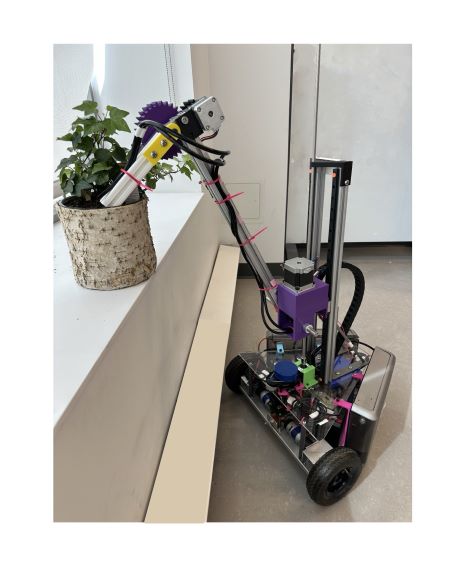
This seed of inspiration eventually blossomed into a full-fledged team project, with each member contributing their own strengths to the various components—robotics, software, systems integration, and user experience. Team members were eager to take on new challenges and adapt to the demands of building a functional prototype from scratch.
Like any ambitious engineering project, SWAMP faced its fair share of hurdles. One of the most persistent issues involved electrical troubleshooting. The team explained that some days, everything would work perfectly. The next day, it would fail for no obvious reason. They learned that even a single loose cable or poorly insulated wire could bring things to a halt. Over time, they got faster at identifying and solving these problems.
Another major challenge was scope. With just one year to complete the project, the team had to make tough decisions about what features to prioritize. They wanted to do everything and said, “The biggest challenge was limiting our scope and identifying the priorities for what we wanted to create.” So the team focused on essentials like building a functional robotic arm for watering and enabling autonomous navigation. Features like automatic recharging and water refills had to be placed on the wish list for future improvements.
Their early stakeholder research was crucial in guiding these decisions. The team spent A-term creating a scoping document based on feedback about which features mattered most to users. That helped them stay focused and build something meaningful within their timeframe.
While SWAMP might initially seem like a luxury, its potential real-world impact runs much deeper. Studies have shown that indoor plants can significantly improve mental health and well-being. Yet, the people who could benefit most—such as busy professionals, the elderly, or individuals with physical limitations—are often the least able to care for them.
That’s where SWAMP makes a difference. It provides an accessible way to enjoy the benefits of plant ownership without the demands of daily maintenance. The team also sees potential beyond the home, envisioning uses in places like nursing homes, schools, and hospitals, where staff are often too busy to consistently care for plants.
“SWAMP can help create a more welcoming and comfortable environment for residents, students, patients, and employees,” the team said. Through their research the team learned that they are definitely on the right track with all of the positive feedback they received from people who would like one in the future.
To test SWAMP’s effectiveness, the team conducted a demonstration in the WPI Gordon Library, simulating a real-world environment. There, the robot successfully navigated the space, located plants, and watered them—proving that the system was both functional and scalable for home use.
The team also had the opportunity to present their project at the Systems and Information Engineering Design Symposium (SIEDS) at the University of Virginia in Charlottesville. “Presenting our MQP was a lot of fun because we were exposed to people with varying backgrounds” they said, which allowed them to have different kinds of conversations about SWAMP.

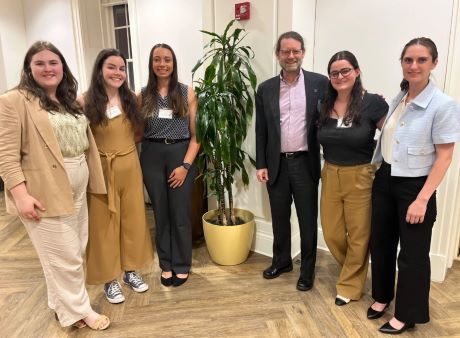
They also enjoyed learning about the wide range of projects at the conference and connecting with other student innovators. At WPI’s URPS event, the team received glowing feedback—including the whimsical yet telling Mom’s Award, thanks to the enthusiastic support of many parents who saw SWAMP’s practical value.
When asked what they found most rewarding about the experience, team members had something personal to share: Colleen appreciated the day-to-day collaboration saying, “Coming into the lab every day with this team made everything more enjoyable. Hearing people say they wanted to buy our product—and winning the Provost Award—were huge moments.” Lauren reflected on how the project came full circle saying, “It was so rewarding to actually bring our scoped vision to life. Seeing SWAMP work after months of effort was amazing.” Isabella highlighted the broader experience saying, “Meeting new people and seeing the variety of projects out there was inspiring. Watching our robot finally function after all the work was incredibly satisfying.”
Looking to the future, the team hopes to expand SWAMP’s capabilities with features like; Greater vertical reach to access more plant heights; a self-docking station for automatic refilling and recharging, advanced plant health analysis (leaf color, wilting, etc.), and soil monitoring and fertilizer dispensing.
The GRL PWR team’s SWAMP project showcases what’s possible when technical skills meet creativity and real-world empathy. By combining robotics with thoughtful user-centered design, they’ve created more than just a helpful gadget—they’ve built a steppingstone toward a greener, more accessible future.
Topics

People