

Seminar Series
“Engineering the Tendon Microenvironment: ECM–Extracellular Vesicle Communication in Healing and Disorders”

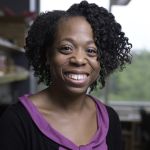
Brittany Taylor, PhD
Assistant Professor, Biomedical Engineering
University of Florida
Abstract: Tendon disorders, including acute injury and chronic tendinopathy, impair function due to the tissue’s limited regenerative capacity and propensity for fibrotic repair. Although the mechanisms governing tendon healing remain incompletely understood, repair involves extrinsic and intrinsic cell populations that deposit mechanically inferior extracellular matrix (ECM). Our lab develops biophysical models of tendon health and dysfunction to study how cell-cell and cell-matrix interactions regulate fibrotic healing, neuroimmune mechanisms of pain, and tissue biomechanics. A central goal is to bridge biomaterials-based in vitro systems with preclinical and human tissue models to study and validate biological processes across scales.
This talk will focus on how the dynamic structural remodeling of the ECM influences extracellular vesicle (EV)-mediated cellular communication during tendon healing and disease progression. Our findings suggest that microenvironmental cues, including matrix stiffness and alignment, strongly regulate EV phenotype and downstream pathways critical to tendon repair and fibrosis. Elucidating these EV-mediated ECM interactions provide fundamental insight into mechanisms of tendon repair and disorders and may enable the development of EV-based diagnostic or therapeutic strategies.
Bio: Dr. Brittany Taylor is the Pruitt Family Endowed Faculty Term Fellow and Assistant Professor in the Department of Biomedical Engineering (BME) at the University of Florida (UF) and Principal Investigator of the Taylor Lab. The Taylor Lab investigates the multi-scale reparative processes of musculoskeletal tissues, primarily tendon and the associated interfaces, to inform the development of tailored engineering approaches that restore tissue structure and function. Her group is particularly interested in studying mechanisms underlying fibrotic tendon healing, neuroimmune drivers of tendon pain, and pathological dysfunction, by bridging nanomaterial-based in vitro systems with preclinical and human tissue models to study these biological processes across scales and the lifespan.
As the recipient of the University of Pennsylvania Provost’s Postdoctoral Fellowship, her postdoctoral research work in the McKay Orthopaedic Research Laboratroy centered on drug delivery for rotator cuff repair and on defining the role of collagen type V in tendon inflammation and remodeling. Dr. Taylor received a Doctor of Philosophy in Biomedical Engineering from Rutgers University and a Bachelor of Science in Biomedical Engineering from the University of Virginia.
Dr. Taylor’s work has been funded by the National Institutes of Health (NIH), the National Science Foundation (NSF), the Burroughs Wellcome Fund, and the Alliance for Regenerative Rehabilitation Research and Training (AR3T). She is a recipient of the NSF CAREER Award and the NIH Clinical and Translational Scienc (CTSI) K12 Career Development Award. Dr. Taylor has published more than 40 peer-reviewed papers, holds two patents, and has authored five book chapters. Additionally, she has received numerous recognitions, including the Tissue Engineering and Regenerative Medine International Society Rising Star Award, The Wu Tsai Human Performance Alliance at Oregan and The Phil and Penny Knight Campus for Accelerating Scientific Impact Award, the Journal for Biomedical Materials Rising Star Award, 2025 UF BME Faculty Teaching Excellence, Rising Star on the CellPress list of Top 100 Inspiring Black Scientists in America, and MIT Rising Star in Biomedical Science.
Dr. Taylor is dedicated to mentorship and broadening participation in STEM. She is the co-founder of multiple initiatives to increase retained representation throughout the academic pipeline and a co-author on several publications that highlight strategies to reinforce the academic pipeline and support the next generation of scientists as they navigate academia.
Please contact kharrison@wpi.edu for a zoom link.