Robotics, AI, and the Quest for Human-Centered Autonomous Systems

Over the past sixty years, robots have progressed from isolated industrial artifacts to interactive, semi-autonomous agents increasingly embedded in next-generation factories, hospitals, and homes. Yet, realizing robots that collaborate safely, robustly, and transparently with people and with one another continues to pose deep theoretical and practical challenges. This talk will trace the evolution of the sampling-based paradigm in robot motion planning with emphasis on recent developments and highlight its central role in enabling reasoning under uncertainty, long-horizon autonomy, and human-centered collaboration. It will discuss how motion planning confronts the fundamental tension between the complexity of high-dimensional robotic systems and the stringent constraints imposed by physical embodiment, including dynamics, sensing, and real-world interaction. Building on this foundation, the talk will explore the relationship between motion planning and higher-level decision-making, where specifications can define what a robot must accomplish rather than how it should accomplish it, and the frameworks required to support more capable and reliable robots that serve people in shared environments.
BIO
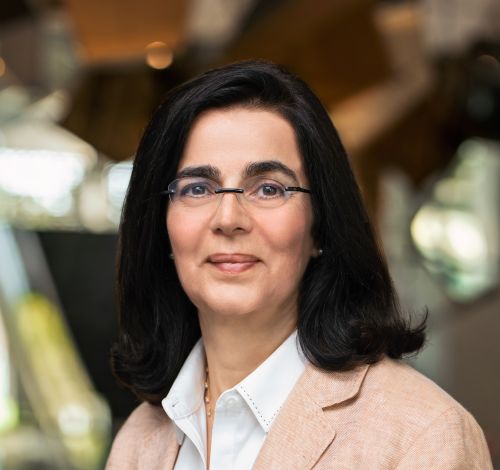
Lydia E. Kavraki is the Kenneth and Audrey Kennedy Professor of Computing and Professor of Computer Science and Bioengineering at Rice University. She is also the Director of the Ken Kennedy Institute for AI and Computing. Kavraki’s research develops the AI and the algorithmics needed to connect the digital to the physical world. She has two main areas of application for her research. In robotics, she develops methodologies for motion planning, machine learning methods for reasoning under uncertainty, and multimodal frameworks for instructing robots and collaborating with them. In computational biomedicine, she develops AI methods to understand biomolecular interactions and aid the design of new therapeutics. Kavraki is a member of the National Academy of Engineering, the National Academy of Sciences, the National Academy of Medicine, and the American Academy of Arts and Sciences. She is the recipient of the IEEE Robotics and Automation Society Pioneer Award and the IEEE Frances E. Allen Medal. More information about her work can be found at https://profiles.rice.edu/faculty/lydia-e-kavraki