SDG 3: Good Health & Well-Being - Ensure healthy lives and promote well-being for all at all ages
A public interest lawyer in my previous life, I was drawn to academia by its capacity to help facilitate attitudinal changes, foster dialogue, and inspire students to be ethically minded leaders. I thrive on the energy of students, particularly when I see them develop a newfound confidence and excitement for learning.
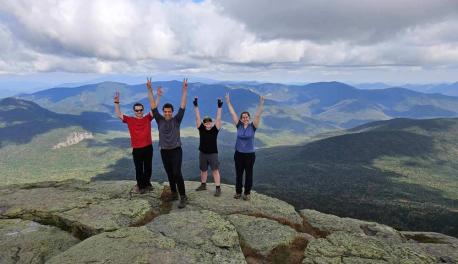
Drawing on my environmental policy knowledge, and awareness of the mental health aftermath of the COVID-19 induced shutdown, in 2022, I explored creation of a program that could facilitate student project work and increase student connections with nature. In the fall of 2023, in collaboration with the World Trails Network: Hub for the Americas (WTNHA) and the Waterman Fund, we developed and piloted a program where students earned a Certificate in Wilderness Ethics. The goal of this program is to develop environmental stewards and leaders, increase student-nature connection (thereby improving mental health) and increase recognition of the indigenous perspective.
In another effort to expand hands-on, interdisciplinary opportunities for WPI students, in 2025, Marja Bakermans and I started an Environmental Leadership Initiative for WPI students interested in developing environmental leadership skills. The Leaders in Environmental Action for the Future (LEAF) Initiative is a multi-term journey where each student is given agency and support to find their leadership style and passions. Through coursework, guest speakers, on-site tours, mentorship, and hands-on engagement students are exposed to a variety of environmental professions. Students put their environmental literacy and leadership into action during the third term, focusing on written actions (Op-Ed, written testimony, conference paper, publication), oral actions (climate story video, conference presentation), event organizing (guest speakers, cleanups, educational events on and off campus), and more. The LEAF Initiative helps STEM students develop a leadership muscle and envision how their personal and professional choices can benefit nature and their communities.
I enjoy teaching courses and advising projects that involve ethical community engagement, environmental justice, environmental law and policy, water law and policy, and constitutional issues. I have worked with numerous municipalities, governmental and not-for-profit organizations on drinking water policy development, equity and quality of public versus private drinking water distribution, stormwater runoff mitigation policies, environmental stewardship, environmental justice, and dam removal policies within the state. I work closely with the Massachusetts Department of Environmental Protection and the United States Forest Service, am a member of the WPI Sustainability Committee, a frequent participant in Regional Stormwater Coalition meetings, a contributor to the World Trails Network Alpine Stewardship Steering Committee, and a board member for the Association for Environmental Studies and Sciences.
Visit Digital WPI to view student projects advised by Professor Dehner.
A public interest lawyer in my previous life, I was drawn to academia by its capacity to help facilitate attitudinal changes, foster dialogue, and inspire students to be ethically minded leaders. I thrive on the energy of students, particularly when I see them develop a newfound confidence and excitement for learning.
Drawing on my environmental policy knowledge, and awareness of the mental health aftermath of the COVID-19 induced shutdown, in 2022, I explored creation of a program that could facilitate student project work and increase student connections with nature. In the fall of 2023, in collaboration with the World Trails Network: Hub for the Americas (WTNHA) and the Waterman Fund, we developed and piloted a program where students earned a Certificate in Wilderness Ethics. The goal of this program is to develop environmental stewards and leaders, increase student-nature connection (thereby improving mental health) and increase recognition of the indigenous perspective.
In another effort to expand hands-on, interdisciplinary opportunities for WPI students, in 2025, Marja Bakermans and I started an Environmental Leadership Initiative for WPI students interested in developing environmental leadership skills. The Leaders in Environmental Action for the Future (LEAF) Initiative is a multi-term journey where each student is given agency and support to find their leadership style and passions. Through coursework, guest speakers, on-site tours, mentorship, and hands-on engagement students are exposed to a variety of environmental professions. Students put their environmental literacy and leadership into action during the third term, focusing on written actions (Op-Ed, written testimony, conference paper, publication), oral actions (climate story video, conference presentation), event organizing (guest speakers, cleanups, educational events on and off campus), and more. The LEAF Initiative helps STEM students develop a leadership muscle and envision how their personal and professional choices can benefit nature and their communities.
I enjoy teaching courses and advising projects that involve ethical community engagement, environmental justice, environmental law and policy, water law and policy, and constitutional issues. I have worked with numerous municipalities, governmental and not-for-profit organizations on drinking water policy development, equity and quality of public versus private drinking water distribution, stormwater runoff mitigation policies, environmental stewardship, environmental justice, and dam removal policies within the state. I work closely with the Massachusetts Department of Environmental Protection and the United States Forest Service, am a member of the WPI Sustainability Committee, a frequent participant in Regional Stormwater Coalition meetings, a contributor to the World Trails Network Alpine Stewardship Steering Committee, and a board member for the Association for Environmental Studies and Sciences.
Visit Digital WPI to view student projects advised by Professor Dehner.
SDG 3: Good Health & Well-Being - Ensure healthy lives and promote well-being for all at all ages
SDG 4: Quality Education - Ensure inclusive and equitable quality education and promote lifelong learning opportunities for all
SDG 6: Clean Water and Sanitation - Ensure availability and sustainable management of water and sanitation for all
SDG 9: Industry, Innovation, and Infrastructure - Build resilient infrastructure, promote inclusive and sustainable industrialization and foster innovation
SDG 12: Responsible Consumption and Production - Ensure sustainable consumption and production patterns
SDG 13: Climate Action - Take urgent action to combat climate change and its impacts
SDG 15: Life on Land - Protect, restore and promote sustainable use of terrestrial ecosystems, sustainably manage forests, combat desertification, and halt and reverse land degradation and halt biodiversity loss
Professor Dehner’s work focuses on:
Featured Works
| Conference Presentations | |
|---|---|
|
|
Award-Winning Student Projects: