Email
krueger@wpi.edu
Robert Krueger is Professor of Human Geography where his work examines a deceptively simple question: how can knowledge, technology, and institutions contribute to development that genuinely improves people's lives?
A human geographer by training (Clark 2001), Krueger has spent his career studying sustainable and socially just development in communities around the world. His scholarship began with questions about cities, economic development, and environmental sustainability and has increasingly turned toward the ways communities themselves understand development, poverty, technology, and social change. Across this work runs a consistent concern: effective development requires more than technological expertise. It requires understanding people, place, institutions, culture, and local knowledge.
Krueger is the author or editor of five books, 34 peer-reviewed journal articles, and 19 book chapters, and has served as guest editor of eight journal special issues. His scholarship and applied research have taken him across North America, Europe, Africa, Asia, and Latin America.
Sustainability, Place, and Development
Krueger's early scholarship examined the political economy of sustainable development and the tensions among economic growth, environmental protection, and social equity. Rather than approaching sustainability primarily as a technical or environmental problem, his work emphasized how it is shaped by institutions, political choices, economic structures, and the particularities of place.
This interest also shaped his work at WPI. In 2007, Krueger created WPI's Environmental and Sustainability Studies degree, establishing an interdisciplinary program that brought environmental and social science perspectives into a university deeply rooted in engineering, science, and technology. The program was founded on the premise that environmental problems cannot be addressed through technical knowledge alone; they also require an understanding of economies, institutions, public policy, communities, and human behavior.
From 2012 to 2018, Krueger served as Guest Professor of Sustainable Spatial Planning at the University of Luxembourg, where he worked with Christian Schulz and Markus Hesse and collaborated with Tim Freytag and Samuel Mössner in Germany. These relationships extended his comparative research on sustainable urbanism, spatial planning, regional development, and the different ways sustainability is understood and practiced across places.
Global Development and Co-Design
Over time, Krueger's research increasingly moved from asking how sustainable development could be achieved toward a deeper question: who gets to define development in the first place?
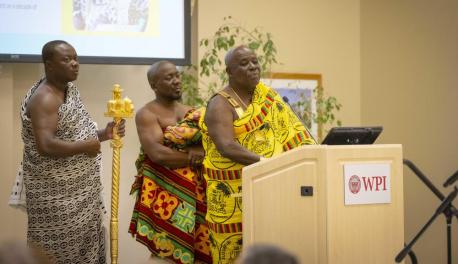
His international work has included post-tsunami reconstruction in Thailand; local economic development in Namibia; higher education and local innovation in Mozambique; cross-cultural co-design and community development in Ghana; and multidimensional poverty research and initiatives in Brazil, Paraguay, Mexico, and the United States. His work in the United Kingdom and continental Europe has provided an additional comparative dimension to his research on sustainability, cities, and regional development.
These experiences led Krueger increasingly to question conventional development models in which outside experts identify both problems and solutions. His work on cross-cultural co-design instead examines how scientists, engineers, universities, development organizations, and communities can work together while recognizing different forms of expertise, experience, and local knowledge.
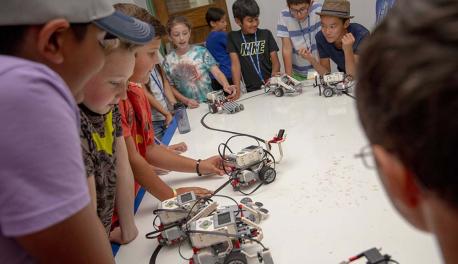
At WPI, this work has been closely connected to project-based education. Krueger has played significant roles in the Worcester Community Project Center, London Project Center, and Ghana Project Center through WPI's Global Projects Program. Working with students and community partners has reinforced an approach to education in which technical knowledge is placed in conversation with culture, institutions, history, ethics, and lived experience.
Building Sustainability and Global Development at WPI
Krueger has translated many of these ideas into institution-building at WPI.
Beginning with the creation of the Environmental and Sustainability Studies degree in 2007, he subsequently developed WPI's graduate program in Science and Technology for Innovation in Global Development (STIGD), building it into a thriving interdisciplinary program connecting social science, technological innovation, and development practice.
STIGD reflects a central premise of Krueger's scholarship: technologies do not enter an empty social landscape. Their consequences depend upon the institutions, cultures, political economies, and communities in which they operate. The program therefore prepares students to understand technological innovation within its broader social, cultural, political, and institutional contexts and to work across disciplinary boundaries on complex global challenges.
Krueger is also the founding director of WPI's Institute of Science and Technology for Development. During its first four years, the Institute attracted more than $1.5 million in external funding, including support from USAID, the Templeton Foundation, and other donors. The Institute provides an institutional home for research, education, and international partnerships exploring how science and technology can contribute to equitable and locally grounded development.
Together, the undergraduate degree, STIGD graduate program, and Institute represent nearly two decades of institution-building around a common proposition: a technological university should educate people not only to create technologies, but also to understand the societies in which those technologies operate and the human purposes they ultimately serve.
Books and Scholarship
Krueger's five books provide another way of tracing the evolution of this intellectual project.
The Sustainable Development Paradox: Urban Political Economy in the United States and Europe (Guilford Press, 2007), co-edited with David Gibbs, examined the tensions among economic development, environmental sustainability, and social justice. The volume established a theme that has remained central to Krueger's work: sustainability is not simply a technical problem but a contested social and political process.
Adventures in Sustainable Urbanism (SUNY Press, 2019), co-edited with Tim Freytag and Samuel Mössner, extended that inquiry to cities around the world. The book examines how sustainability is constructed, negotiated, and experienced differently across particular places rather than assuming a single model of the sustainable city.
Science, Engineering, and Sustainable Development: Cases in Planning, Health, Agriculture, and the Environment (De Gruyter, 2024), co-edited with Yunus Telliel and Wole Soboyejo, shifted the focus more explicitly toward the relationship between technological expertise and community knowledge. Drawing upon cases from the Global South, the book considers how science and engineering can contribute to development while recognizing the knowledge, agency, and innovative capacities of communities themselves.
Smart Villages (De Gruyter) extends these questions into rural and community development, examining the relationships among technology, local innovation, infrastructure, institutions, and community knowledge. It reflects Krueger's interest in moving discussions of technological innovation beyond metropolitan centers and asking what innovation means in places frequently positioned as recipients rather than producers of knowledge.
Decentering Science and Technology in Global Development: Co-Designing for Community Sustainability (De Gruyter, 2026) brings these strands together most explicitly. Drawing upon international development experiences, the book examines what changes when scientists, engineers, and development institutions cease treating communities primarily as recipients of innovation and instead recognize them as producers of knowledge and partners in the design process.
Together, the five books and Krueger's broader body of scholarship document an intellectual progression: from asking whether development is sustainable, to examining how sustainability and technological change are produced in particular places, to asking who defines development and whose knowledge, capabilities, and aspirations determine what progress means.
Multidimensional Poverty and Emerging Technologies
Krueger's more recent research brings these questions to the study of multidimensional poverty. Working with partners in Latin America, Africa, and the United States, he studies approaches that move beyond income as the principal measure of poverty to examine the interconnected circumstances shaping people's lives—including housing, education, employment, health, environment, social relationships, institutional access, and individual and family agency.
This work raises a related epistemological question: how do institutions know what they think they know about poverty? Conventional indicators can identify important patterns, but they do not necessarily capture how families experience poverty, why particular deprivations persist, or what individuals themselves identify as priorities for change.
That question has increasingly brought Krueger's work into conversation with artificial intelligence, data visualization, and emerging technologies. Rather than approaching AI principally as a technical field, his research examines its implications for knowledge, development, and decision-making. He is particularly interested in whether emerging technologies can help institutions understand complex social problems without reducing people and communities to the data collected about them.
Teaching and Academic Leadership
Krueger's research is closely connected to his teaching and academic leadership. At WPI, he has served as Head of the Department of Social Science and Policy Studies, where his work has emphasized the role of the social sciences within a technological university.
He has argued that major challenges such as climate change, poverty, inequality, artificial intelligence, technological disruption, and sustainable development cannot meaningfully be divided into "technical" and "social" problems. Technologies are created and deployed within societies, and their consequences depend upon institutions, values, power, culture, and human behavior.
Krueger is also Editor in Chief of WPI Press, extending this commitment to interdisciplinary scholarship and the communication of ideas across conventional academic boundaries.
Across his research, teaching, international collaborations, publications, and institution-building, a common question connects Krueger's work: how do we determine whether change is actually change for the better? His scholarship suggests that answering that question requires more than measuring technological progress or economic growth. It requires understanding how people experience change, whose knowledge counts in defining problems and solutions, and whether individuals, families, and communities have meaningful agency in shaping their own futures.
Robert Krueger is Professor of Human Geography where his work examines a deceptively simple question: how can knowledge, technology, and institutions contribute to development that genuinely improves people's lives?
A human geographer by training (Clark 2001), Krueger has spent his career studying sustainable and socially just development in communities around the world. His scholarship began with questions about cities, economic development, and environmental sustainability and has increasingly turned toward the ways communities themselves understand development, poverty, technology, and social change. Across this work runs a consistent concern: effective development requires more than technological expertise. It requires understanding people, place, institutions, culture, and local knowledge.
Krueger is the author or editor of five books, 34 peer-reviewed journal articles, and 19 book chapters, and has served as guest editor of eight journal special issues. His scholarship and applied research have taken him across North America, Europe, Africa, Asia, and Latin America.
Sustainability, Place, and Development
Krueger's early scholarship examined the political economy of sustainable development and the tensions among economic growth, environmental protection, and social equity. Rather than approaching sustainability primarily as a technical or environmental problem, his work emphasized how it is shaped by institutions, political choices, economic structures, and the particularities of place.
This interest also shaped his work at WPI. In 2007, Krueger created WPI's Environmental and Sustainability Studies degree, establishing an interdisciplinary program that brought environmental and social science perspectives into a university deeply rooted in engineering, science, and technology. The program was founded on the premise that environmental problems cannot be addressed through technical knowledge alone; they also require an understanding of economies, institutions, public policy, communities, and human behavior.
From 2012 to 2018, Krueger served as Guest Professor of Sustainable Spatial Planning at the University of Luxembourg, where he worked with Christian Schulz and Markus Hesse and collaborated with Tim Freytag and Samuel Mössner in Germany. These relationships extended his comparative research on sustainable urbanism, spatial planning, regional development, and the different ways sustainability is understood and practiced across places.
Global Development and Co-Design
Over time, Krueger's research increasingly moved from asking how sustainable development could be achieved toward a deeper question: who gets to define development in the first place?
His international work has included post-tsunami reconstruction in Thailand; local economic development in Namibia; higher education and local innovation in Mozambique; cross-cultural co-design and community development in Ghana; and multidimensional poverty research and initiatives in Brazil, Paraguay, Mexico, and the United States. His work in the United Kingdom and continental Europe has provided an additional comparative dimension to his research on sustainability, cities, and regional development.
These experiences led Krueger increasingly to question conventional development models in which outside experts identify both problems and solutions. His work on cross-cultural co-design instead examines how scientists, engineers, universities, development organizations, and communities can work together while recognizing different forms of expertise, experience, and local knowledge.
At WPI, this work has been closely connected to project-based education. Krueger has played significant roles in the Worcester Community Project Center, London Project Center, and Ghana Project Center through WPI's Global Projects Program. Working with students and community partners has reinforced an approach to education in which technical knowledge is placed in conversation with culture, institutions, history, ethics, and lived experience.
Building Sustainability and Global Development at WPI
Krueger has translated many of these ideas into institution-building at WPI.
Beginning with the creation of the Environmental and Sustainability Studies degree in 2007, he subsequently developed WPI's graduate program in Science and Technology for Innovation in Global Development (STIGD), building it into a thriving interdisciplinary program connecting social science, technological innovation, and development practice.
STIGD reflects a central premise of Krueger's scholarship: technologies do not enter an empty social landscape. Their consequences depend upon the institutions, cultures, political economies, and communities in which they operate. The program therefore prepares students to understand technological innovation within its broader social, cultural, political, and institutional contexts and to work across disciplinary boundaries on complex global challenges.
Krueger is also the founding director of WPI's Institute of Science and Technology for Development. During its first four years, the Institute attracted more than $1.5 million in external funding, including support from USAID, the Templeton Foundation, and other donors. The Institute provides an institutional home for research, education, and international partnerships exploring how science and technology can contribute to equitable and locally grounded development.
Together, the undergraduate degree, STIGD graduate program, and Institute represent nearly two decades of institution-building around a common proposition: a technological university should educate people not only to create technologies, but also to understand the societies in which those technologies operate and the human purposes they ultimately serve.
Books and Scholarship
Krueger's five books provide another way of tracing the evolution of this intellectual project.
The Sustainable Development Paradox: Urban Political Economy in the United States and Europe (Guilford Press, 2007), co-edited with David Gibbs, examined the tensions among economic development, environmental sustainability, and social justice. The volume established a theme that has remained central to Krueger's work: sustainability is not simply a technical problem but a contested social and political process.
Adventures in Sustainable Urbanism (SUNY Press, 2019), co-edited with Tim Freytag and Samuel Mössner, extended that inquiry to cities around the world. The book examines how sustainability is constructed, negotiated, and experienced differently across particular places rather than assuming a single model of the sustainable city.
Science, Engineering, and Sustainable Development: Cases in Planning, Health, Agriculture, and the Environment (De Gruyter, 2024), co-edited with Yunus Telliel and Wole Soboyejo, shifted the focus more explicitly toward the relationship between technological expertise and community knowledge. Drawing upon cases from the Global South, the book considers how science and engineering can contribute to development while recognizing the knowledge, agency, and innovative capacities of communities themselves.
Smart Villages (De Gruyter) extends these questions into rural and community development, examining the relationships among technology, local innovation, infrastructure, institutions, and community knowledge. It reflects Krueger's interest in moving discussions of technological innovation beyond metropolitan centers and asking what innovation means in places frequently positioned as recipients rather than producers of knowledge.
Decentering Science and Technology in Global Development: Co-Designing for Community Sustainability (De Gruyter, 2026) brings these strands together most explicitly. Drawing upon international development experiences, the book examines what changes when scientists, engineers, and development institutions cease treating communities primarily as recipients of innovation and instead recognize them as producers of knowledge and partners in the design process.
Together, the five books and Krueger's broader body of scholarship document an intellectual progression: from asking whether development is sustainable, to examining how sustainability and technological change are produced in particular places, to asking who defines development and whose knowledge, capabilities, and aspirations determine what progress means.
Multidimensional Poverty and Emerging Technologies
Krueger's more recent research brings these questions to the study of multidimensional poverty. Working with partners in Latin America, Africa, and the United States, he studies approaches that move beyond income as the principal measure of poverty to examine the interconnected circumstances shaping people's lives—including housing, education, employment, health, environment, social relationships, institutional access, and individual and family agency.
This work raises a related epistemological question: how do institutions know what they think they know about poverty? Conventional indicators can identify important patterns, but they do not necessarily capture how families experience poverty, why particular deprivations persist, or what individuals themselves identify as priorities for change.
That question has increasingly brought Krueger's work into conversation with artificial intelligence, data visualization, and emerging technologies. Rather than approaching AI principally as a technical field, his research examines its implications for knowledge, development, and decision-making. He is particularly interested in whether emerging technologies can help institutions understand complex social problems without reducing people and communities to the data collected about them.
Teaching and Academic Leadership
Krueger's research is closely connected to his teaching and academic leadership. At WPI, he has served as Head of the Department of Social Science and Policy Studies, where his work has emphasized the role of the social sciences within a technological university.
He has argued that major challenges such as climate change, poverty, inequality, artificial intelligence, technological disruption, and sustainable development cannot meaningfully be divided into "technical" and "social" problems. Technologies are created and deployed within societies, and their consequences depend upon institutions, values, power, culture, and human behavior.
Krueger is also Editor in Chief of WPI Press, extending this commitment to interdisciplinary scholarship and the communication of ideas across conventional academic boundaries.
Across his research, teaching, international collaborations, publications, and institution-building, a common question connects Krueger's work: how do we determine whether change is actually change for the better? His scholarship suggests that answering that question requires more than measuring technological progress or economic growth. It requires understanding how people experience change, whose knowledge counts in defining problems and solutions, and whether individuals, families, and communities have meaningful agency in shaping their own futures.
Analysing the governance of land grabbing from a combined political ecology and environmental justice perspective 2019
Art, Social Change, and the Green City: A rebuke of green metropolitianization 2018
Diverse and Alternative Economies: Empirical Evidence from German-Speaking Scholarship 2018
The Post-Politics of Participation in the European City 2018
Institutionalizing alternative economic spaces? An interpretivist perspective on diverse economies 2017
Greening the US Economy? 2017