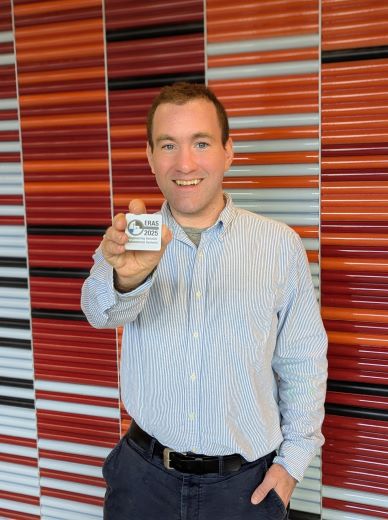
When Professor Kevin Leahy stepped into the role of General Chair for Engaging Reliable Autonomous Systems (ERAS ) 2025, it was not part of a long‑planned roadmap—it happened almost by chance. As Associate Co‑Chair of IEEE RAS’s Technical Committee (TC) on Verification of Autonomous Systems, he had successfully organized workshops and local conferences in Boston before. After gaining confidence from that experience, he offered to lead ERAS with WPI’s administrative and logistical support making WPI an ideal host for this event.
ERAS 2025 was created through a collaborative effort among three TCs in the IEEE Robotics & Automation Society (RAS) —Verification of Autonomous Systems TC, Software Engineering TC, and Performance Evaluation and Benchmarking TC. The founders wanted to foster an interdisciplinary space where diverse approaches to autonomous system reliability could meet and inspire each other, rather than each community staying within its own silo.
Under Professor Leahy’s guidance, the conference highlighted cutting-edge topics. A major focus was on the verification of AI in autonomous systems—now a central challenge for the field. Still, another standout area was reliability in human‑robot interaction: how to adapt formal methods and verification tools for everyday end users. This included approaches like user studies and eliciting formal specifications from non‑experts.
Getting ERAS off the ground was not without its hurdles. As a brand-new conference, ERAS had no inherent audience. The organizing team leaned on established IEEE RAS communities and promoted the event broadly. Confidence in attendance grew only after submissions began coming in.
One of the most significant strategic choices—one that Professor Leahy calls a major win—was the keynote lineup. Invited were:
- Ben Axelrod from the Robotics and AI Institute (formerly of iRobot), representing industry,
- Craig Lennon from the U.S. Army, offering a government perspective, and
- Sayan Mitra from UIUC, bringing an academic lens.
This trio of speakers reflected the spectrum of reliability concerns, from global domestic deployment to military exigencies.
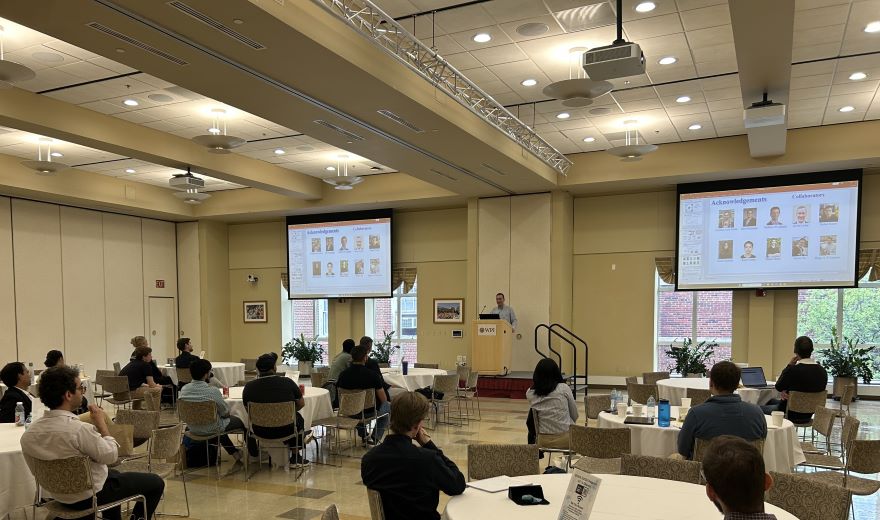
The results of ERAS 2025 exceeded expectations. The inaugural conference held May 29–30 at WPI culminated in a new commitment: ERAS 2026. Which will take place at the Faculty of Electrical Engineering and Computing (FER), University of Zagreb, Croatia.
Looking forward, Professor Leahy envisions ERAS evolving into a vibrant, internationally inclusive community. One that aims to unite stakeholders from academia, industry, and government across various regions, dedicating an entire event to the pressing challenge of building safer, more reliable autonomous systems. In contrast to larger robotics or AI conferences where the topic might merit only a session or two, ERAS offers full immersion into this crucial field.

Topics

People