Follow The WPI Podcast on your favorite audio platform
E22: Athletics and Academics | Dana Harmon| WPI Athletics
In this episode, we sit down with WPI’s Athletic Director to explore what it really means to be a student-athlete at one of the nation’s top STEM universities. With college sports making headlines nationwide, we take a closer look at the Division III experience at WPI — where academics come first, teamwork is essential, and the lessons learned on the field connect directly to WPI’s project-based learning approach.
We talk about balance, motivation, competition, community, and why being part of a team at WPI is about much more than winning games. It’s about collaboration, leadership, and preparing students for life after graduation.
Transcript
Colleen: College athletics have been making a lot of headlines lately from conference realignment to NIL deals to the ongoing debates about the balance between sports and academics. But here at Worcester Polytechnic Institute, the story looks a little different. Here student athletes compete at the highest division three level, not for scholarships or national TV exposure, but for the love of their sport, their teammates, and the challenge of balancing academics with athletics at one of the nation’s tops STEM universities.
Being part of a team isn’t just about what happens on the field or in the gym. It’s about collaboration, leadership, and problem solving. The same skills that help students succeed in a close game, help them succeed in WPIs project based learning environment where teamwork is central to everything they do.
Today we’re talking to Dana Harmon, the Director of Physical Education, Recreation and Athletics at WPI, about finding that balance between competing and learning between teamwork and innovation, and between being athletes and engineers, scientists and creators. Plus, we’ll get her thoughts on the future of division three athletics.
To kick things off, can you tell us, Dana, a little bit about your background and what led you to a career in collegiate athletics?
Dana: Yes, so I was lucky and fortunate to have one of the original girl dads and he loved sport. Growing up I played a lot of sports and my older brother played a lot of sports. My dad coached, so I got very much involved in playing and being around sport, and I did it all through high school. I was fortunate to get a basketball scholarship at Bellarmine College, and then I went into the real world of business. After a couple of years of that, I was like, huh, there should be more for me out there. And I thought long and hard, did some informational interviews and decided to go back to school. I went to UMass Amherst for a sport management degree, and then that led me to being a graduate student at Mount Holyoke College. Then I worked at Wellesley College for a while, and then I got this job 23 years ago.
Colleen: That’s great. And I love that your dad was a coach because I didn’t know that, but youth coach. Youth coach, yeah. But still there’s a lot of overlap and I know coaches and athletic directors that have come up as you did through high school and then college athletics. But to have a coach and understand that mindset really must have been, in a way, put you in a different mindset from the beginning.
Dana: It’s interesting ’cause we do talk sometimes when we recruit kids and they’re like, oh, they’re a coach’s daughter or a coach’s son, and there’s just a different mindset of. How you understand games differently. Mm-hmm. You also see the pressures that coaches are under. Now granted he was a youth sport coach, but you also got to see the joy of it, and he really believed in the inherent power of what sports could do for kids.
And so he made a difference in our community. Even at his funeral, a lot of kids from when they were really young came to his. Funeral we hadn’t seen in years and talked greatly about his impact and just knowing that what sport can do and how it helps you, kind of wanted to get into that and be able to provide that and do it as a director versus a coach. because I, I really enjoy being behind the scenes and putting things in place to let other people really follow their passions as a coach and as student athletes.
Colleen: Yeah. And your time in business. Yes. And then over into sports management, how did that shape you into what you have put together here at WPI?
Dana: Well, as I said about being behind the scenes, so the real world business stuff that I did, I was a bank auditor and a store auditor. So what that involves is you go behind the scenes and you audit the systems in place, that’s the very basic understanding of the job. So you learn behind the scenes of how a retail store works. And you learn behind the scenes of what individuals have to do and what are the processes and systems. And so when I think about that, you know, systems processing, systems thinking, that’s what really led me to wanting to be in management and really. Thinking about how to move organizations, but also how to implement change and how to implement ways of getting work done. And then the icing on the cake was being involved with athletics, right? It just really made it fun. I have a great job. It’s not easy all the time. But I have a great job because part of my job is to sit and watch people do their sport. Whether that’s watching my coaches and or the student athletes perform in something they love and they really invest a lot of time and energy in into, it’s not just a nine to five job, it’s, it can be all encompassing for all of us and you really have to love it. And I do.
Colleen: I know, I can tell that. And you mentioned business too, a couple of times. College sports are a big business. Yes. Division three though. And I don’t know if we want to say it’s completely different, but there are differences. So what do you think makes Division three athletics stand out from other divisions?
Dana: Yeah, sometimes people are like, well, you don’t get any athletic scholarships. Why would anybody want to do it? And the reality is there’s a huge youth sport. Contingent out there. There’s a lot of people that have their kids in youth sport. There’s a lot of people that love sport, and you might not be as talented to get a division one scholarship or a division two scholarship, but it doesn’t mean you love it any less. It doesn’t mean you don’t want to be successful at it and you don’t want to excel. And I would argue there are many of our top student athletes who could play at Division one, but they want to come to a school. That will respect them as students and getting their academics and not telling them that they have to have this major and you have to be done by this time with your classes and you’ll be going to classes over the summer. This really is a division that supports them being a student first and then an athlete in Excel, in both, and many of our student athletes, they picked WPI, so they could do both. That was the distinguishing factor. It wasn’t like I’m coming to WPI and. Oh, I’ll play sport. They really are making incisive decisions about where they want to go and play the sport. Right. And do well academically too. Right.
Colleen: I’ve seen these teams, this is high level athletics. Mm-hmm. I’d like to point out to those that may be listening who don’t know about division three athletics and what’s offered here at WPI and also NEWMAC Conference. These athletes are committed. As you mentioned, they could play in other divisions, some of them. Many of them. So it’s not like you’re just pulling together a club team to represent WPI.
Dana: Correct. These are true athletes and many of them have excelled in everything they do. And sometimes we have to worry about that pressure that they sometimes put on themselves. But for the most part, they want to do well in everything. And it’s not just limited to athletics and their academics. They also are very active on campus, and they’re involved in sororities and fraternities and other clubs. And we sit there and we go, wow, how do they do it all? And they are doing it well. Sometimes we have to hold them back a little bit or ask them, you know, are you sure you can do all of this? They’re great time managers and they just want to get the most out of these four years. And that means committing greatly to their sport, and wanting to reach the highest level there. And you know, we’ve won some national championships. We go into the NCAAs, we win conference championships, but also they do really well academically and we have an overall 3.6. I think it’s 3.63. That’s impressive. Overall, team, GPA, our coaches do amazing jobs of finding the right kids and then when they’re here, really helping them and nurturing them in both areas as a student and as an athlete.
Colleen: Let’s dig into that a little bit more. How do your athletes manage to balance the tough course load with practices games? Again, WPI, Tuft Stem School and seven Week terms. Right, which right. That’s tough. I keep saying it. That is tough. Right, right. But they do it. Exactly. And it’s not easy. Generally the shock and awe of a term hits a lot of kids. It is overwhelming. And our coaches get in front of it and they talk to them about it over the summer and they work on time management and doing regular check-ins. And you know, again, I know I said this before, our coaches are amazing. They really do a great job. They’re a terrific support network and for the most part, they can identify things before it gets really, really bad academically, and that’s a rare occasion that somebody just doesn’t do well because there’s so much that’s done in advance before they get here and, and it also takes a village. In that academic advising, we talked previously before this started about Paul Riley and his group. We have the student development and counseling center, student affairs. There’s just so many people on campus who want to see students succeed, and I think that’s a great motivator for everybody to want to do well here and to know that you’re going to be supported and it’s okay to fail because you’ve got these resources and support that you try your best. And if it sometimes doesn’t work, you know what you’re going to get back up and you’re going to do it again. Yeah, and try it better.
Colleen: Good advice. Across the board, the coaches, again, are phenomenal. And you mentioned academic advising. Are there certain systems in place also to help student athletes with time management and the overall balance?
Dana: We have formal systems with academic advising in that they really take a look at schedules and really help the students. Get into courses so it’s not conflicting with contests, which has been a huge help. Student government supported that to be able to do that for the student athletes. I know it’s done for other students, but it’s really made a difference also for faculty. They’re also a terrific group that really supports the student athlete experience here too. So when we need to miss classes it isn’t held against the student athletes, and it’s how do we make sure that we can do that work and get it done in a timely way. So the systems are formal and they’re informal, and it’s really great. It’s just about who WPI is. And I wouldn’t say that it’s just for us as student athletes that have this, I really feel that we are able to take advantage of it because our coaches know all of it, right, and are responsible for the kids on their team. But there’s also many, many kids that get the same support and guidance and resources through student affairs and academic advising. So there’s really a great support network here for anybody coming to WPI.
Colleen: Yeah, you’re right. Because someone may be just as invested with time and commitments in a high powered rocketry club we have here. Exactly. Or the SAE formula one racing.
Dana: Exactly. And I think one of the things I’m most proud of in being a part of student affairs and academic affairs is that it’s not like, okay, you’ve been admitted to WPI, good luck. We really put our arms around kids and really try to do our best to make sure that somebody hasn’t gone wayward. And if they have, how can we help them to come back and, and make sure they do things well? And that’s for all students here. Right. And so I’m really proud to be a part of that group as well.
Colleen: Thanks for mentioning that. Can you think of a student athlete who really embodies that balance between academics and athletics?
Dana: The issue is that there’s many, yeah, there’s so many. There’s so many on every team that really all do it well, and it’s not all about the 4.0 All America kids that do well as a student and an athlete. It’s also the kid who’s getting their 2.5 and they’re doing great things still and their projects, et cetera, and. They’re lightening it up when they leave here and we hear about it and how important WPI was still for them. So again, I think all of ’em are doing wonderful. They all have their individual paths. Are there some that do represent the best of the best? Yes, there are. We’ve had some student athletes who’ve been recognized the. Best in the nation in Division three, and a couple that have been the best in all of college athletics. And we’re really proud of that. And it’s a byproduct of the good work that our coaches do to find the right kids. Maybe they don’t want to go in that, chew ’em up and spit ’em out world of division one. And they want to come here and they want to be good in everything, but they don’t want that pressure to just be an athlete. And so, you know, we’re finding our niche that way as well. One student athlete that stood out to me in recent years because of the path that he took being a football player, but then going to work for the New York Giants.
Dana: Yep. In data analytics. And we just put in into our Hall of Fame, Gabby Hoops a goaltender for our women’s soccer team. That’s right. So she ended up working for the World Cup and she was doing the VR, which is video assistant refereeing, which basically is the video. That helps. The official who’s calling the game have this technological backup and she was helping to lead that, and she’s continuing to do that kind of work. There’s just really amazing stories that different ones have been involved in sport, but also some others that are doing some amazing things at nasa. You know, you name it there.
Colleen: So D3. It doesn’t come with an athletic scholarship. Right. What keeps these students so motivated?
Dana: Well, it’s obviously not about the money. It’s the passion for the sport, and that doesn’t change from division one to division two or division three. They loved the sport. They loved playing it growing up. It’s a part of who they are, and it’s also. A way that they’ve been able to move in the world and learn about themselves and develop the resilience and the grit and the determination and working within a group. I think it’s perfect. The student athlete here at WPI, because there’s so much project-based learning and working in teams, that’s not always about sitting in a lecture hall and getting your education. It’s really about how do you move in the world? How do you recover from setbacks? Think about research, right? Usually research is a lot of things not going right until you figure it out. Right? It’s the same thing in athletics. You can do everything right and it still doesn’t work the way you wanted it to, but it doesn’t mean you’re a failure. You know? Failure means to me not trying. Sure. And so that’s why all of our student athletes are really amazing because they’re trying, they’re trying to make this work with the tough academics. They’re trying to excel at the top levels and they love being a part of a group and figuring that all out with everybody’s strengths and weaknesses. So this is why employers love our student athletes and they love our students, but they really love our student athletes too, in today’s world.
Colleen: Yeah, I see two correlations with being part of a team, what you just mentioned first. Project-based learning. Yep. Especially with the team sport. Let’s take football for example. There will be a quarterback, a running back, a blocker. I’m running out of positions. Yes. Much like someone working with an IQP or MQP team, Students are going to come in with different strengths. Right. And you have to rely on one another. Mm-hmm. The quarterback can’t be everything to everyone. Right. He, she, they rely on a running back. Right.
Dana: They rely on the line to protect them and everything like that. And you know, we talked previously about cross country. It’s the same thing. It’s, although considered an individual sport, it’s the how do you motivate each other? How do you help each other reach their peak? How do you help them to get the best out of it? And it’s still a team sport. Yeah. As an individual you can do some things, but it’s a part of being a team and working out every day. People and helping them through tough moments when you still have to get on the line and compete. Mm-hmm. So it’s all of those things. Our student athletes really, when they leave here, they can walk into any business and know how to work with a group and get a group moving and motivated. Learning weaknesses and strengths and really being able to lead groups too. Right. You know, it’s not just being in a group and how to be a good team member, but it’s also many of them get the leadership skills to just hit the ground running when they get out of here. All right.
Colleen: The second thing you mention is the game plan. There is so much preparation time spent that again, coaches don’t get enough credit for how much time and energy they invest to make sure that our student athletes are prepared for the next competition, right? And much like research, maybe the game plan has to be changed. Right, because the challenge is different. The outcome wasn’t what was expected, and that’s okay. You’ve never heard someone yell at a coach and well, maybe you have and say. You’re not going with the same game plan. No. You have to have different ones. So I’m guessing that does spill into the lab. You have to have a different game plan for the outcome on a chemistry experiment, et cetera. Right?
Dana: There’s preparation in advance and then there’s figuring it out in the moment. Right? Mm-hmm. That, how do you best laid plans? I mean, I can give you so many cliches, right? Sure. And, uh, and I think that’s what separates them and our coaches too. Like they could have a great game plan and they don’t know what happened in the life of an 18 to 22-year-old the night before, a really big contest.
And then how do you have to adjust also as a coach in the moment? To whatever’s available to you who’s playing well, who isn’t. You have to make those adjustments to. But for student athletes, they really learn that I’ve got a job that every day I love coming to, but it’s not always easy either. Mm-hmm. And some days I feel like my energy might be 50%, but I still have to come in and do the best I can with that 50% that day. And that’s what sport has taught me. And I think that’s what we’re teaching our student athletes too, is you can’t be a thousand percent all the time, but what can you do with what you have and make sure you’re showing up well in the world and making sure that you know you are trying to make things better and give your best in that moment.
Colleen: Great. Stepping off the field, the turf, and even out of the lab. The student athletes here I see in a lot of different ways in the campus center. Yeah. Mentoring in the community, having fundraisers. Can you talk a little about the extracurricular outside of even sports?
Dana: Yes. Again, I don’t know how they do it all. I’m exhausted at the end of the day, and I know they’re going to meetings at night and it’s the wonderful thing about being an 18 to 22-year-old who wants to get the most out of what they’re doing in their time here. So I have great admiration for them. They just want to experience so much they want to do well. And I think it’s wonderful that at our level in division three, they’re able to do that. And it’s not all their sport all the time. It’s a lot, right? Sport is a lot, but it’s not all the time. Every waking moment and. I think we’re showing them how you can be well-rounded in the world. And again, you can’t give a thousand percent to everything. And sometimes we have to have some hard conversations about like, ah, you know, if you have your goals in this area and your goals in this area and your goals in that area, you. Can you make all those goals happen when you have to give so much in each area, but for the most part, our kids want to do so much. They want to be involved in other things. They want to make a difference. Mm-hmm. There’s a lot of awareness. Unfortunately, we’ve had way too much cancer affecting a lot in our athletic program. Yeah. And these kids want to make a difference. Yeah. And just helping people. We have a bone marrow drive every year with our football group. I believe it’s been two matches, that they’ve made a difference in that family’s lives, and this is what our kids are about. The kids today want to make a difference. I’m not saying others didn’t, but I do think this generation is one that really wants to do meaningful things, and that’s. A wonderful place to be.
Colleen: Right. Now, getting back to you, what are the challenges in managing our athletic program?
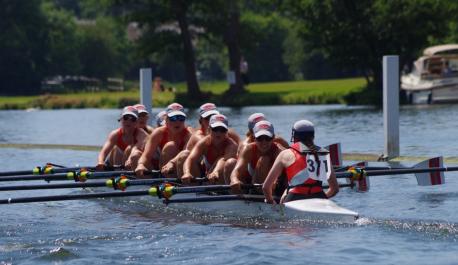
Dana: So the challenges are it takes a lot to do what we do. Even though when people hear division three, there’s a lot of behind the scenes work that needs to be done. Not only prepping and getting ready for the contest, but it’s practice daily, it’s broadcasting, it’s the budgeting and all of that. We’ve been fortunate to be supported well by the university, but there’s still gaps that we need help with and our alumni have come through. Parents, family, friends. They’ve helped support the programs too, to do those extra things that make it extra special. We can get on a bus and go and have food, but then if we want to go on an overnight or if we want to do some other special trips, like go to Henley with our rowing program, those are some of the special things that our alumni and those that donate really make the difference in making it a special experience that these student athletes should have, and we’re working really, really hard to continue to provide that for them. And so we’re gonna need more and more help moving forward.
Colleen: College sports has been in the news quite a bit lately. Primarily the NIL, the transfer portal with division one. Yes. Going somewhat into division two, how is this, or is this impacting D three sports?
Dana: Division one is crazy right now. Mm-hmm. And that’s the best way I can define it. Yeah. It’s unpredictable. It is chasing the almighty dollar. And so they’re just going down a path that is unfortunately taking Division II and Division III with them. And so sometimes that means rules get changed, that we in division three are like, we didn’t want that rule to change or we didn’t want this. NIL might be a perfect example of that. Mm-hmm. But we are doing it as best we can. We want to do it, but. I think the next couple of years are really going to be telling because the money is so big in division one and they all need it, and what is it? Take to continue to bring in the money that they need. So I think the byproduct has been in division three that we’ve been like, oh, maybe it won’t affect us, or We hope it doesn’t affect us. And now we’re taking that turn of we need to set what we need to do moving forward. We are tied to division one because they fund the NCAA. Okay. Uh, the division one men’s basketball tournament only in particular, NCAA doesn’t get any money from football. They get it from the men’s basketball tournament. (Colleen: Wow, I didn’t know that) Yeah, most people don’t. What happens is that basketball contract is coming up in a few years, but if. They do the same model that football is where they take it. And those schools want to have their own tournament. Like they have the college football playoff notice that never says NCAA college football playoff. It’s college football playoff. And so that’s the difference and that’s where probably division one is going to go. What does that do to us in division three? Does that allow us to still have national championships? You know, I’ve been in this business a long time. I’ve seen huge changes in division three that I never thought I would see. But, we also need students coming in our doors. Mm-hmm. In Division three, we need to make sure that we can get the students that we want, not only athletically, but also academically. And many schools are using athletics in order to fill out their enrollment. Athletics is very important and why? Because kids who are generally in college athletics, they enjoy the experience. They stay longer in school and they graduate more likely on time in division three. Vastly different than division one. So I think we’re trying to weather, for lack of a better term storm. So when we talk about the transfer portal, lots of kids are moving around in division one and it doesn’t sound great and I think it’s not making for a great product for division one, but in division three we used it the right way. We have kids who have graduated and they had an extra year of eligibility, so they went and did grad school someplace. Our top student athletes ended up playing at some division one schools, or they went to another division three that was a top division three in the nation as well. So kids were using it the right way. In division three, they achieved their academics. And you know what? I’ve got another year, I want to play another year. And there’s nothing wrong with wanting to play another year and getting your masters paid for. Right? Yeah. And so those are the types of things that, it’s not bad when we hear transfer for division three, but it’s crazy in division one when you hear transfer.
Colleen: Sure. Could there be a scenario that someone could play division one, but with all of the craziness as you so eloquently put it, would look more at a division three school where it seems to be a little bit. Less crazy, somewhat calmer waters.
Dana: Yes, absolutely. And those are the discussions we have and those are the recruiting that we’re doing because our programs have gotten really good and in many cases we have some of the top division three programs around in a particular sport. And so they are going after those division one kids. They’re not going necessarily after the Star, but the kid who. Might come off the bench and or be one of the last starters on the team, something like that. And they’re really, really good, but they’ve seen the grind. They don’t want to be spending 10 hours a day sometimes in doing their sport at Division one. And they really want to have a balance in their life and not be all consuming. And division one goes year round. Mm-hmm. Through the summer. They go to classes in the summer, they do all sorts of stuff year round. We don’t have that and we’re not going to have that. And that’s what’s the beauty about it. It’s like it’s a part of you and it’s something you can excel at, but it doesn’t define you and you can really celebrate the other parts of your life beyond athletics. That’s what Division three is a champion of and something I’m proud that we’re a part of.
Colleen: Are there any new programs or initiatives that you’re excited about?
Dana: Well, one of the things that as we’re constantly looking for efficiency and effectiveness, right? And we did get some really good support for a new software that we’re using, that’s helping us to coordinate our operations and systems a little bit more. I’m not going to do the commercial name, but it really, it’s been a process. It’s changed, but it’s also having to learn new things and new ways of thinking, et cetera. So it hasn’t been the easiest, but we see how we’re going to get even more coordinated. We’re moving beyond paper. We’re moving beyond sending emails all the time and just trying to use a system that can help us to be better. And we’re taking the baby steps now. Mm-hmm. And some are excelling and some are struggling. And I’ll put myself in the struggle bus, but it’s something that we, I can see and I believe others can see how it’s going to make us better. It’s just trying to get through these growing pains right now. So I do see that as something really exciting. Good. I’ll look forward to that. End. Technology can always be a challenge. Exactly, yes. Embracing more ai when you think about writing stories, right? Yeah. After our games, we have people, Rusty-everybody out there who might know our athletic program knows Rusty- and his crew will be up late at night writing stories. Now you can throw that box, score into chat, GPT, and boom, it gives you a five paragraph story that we can post. Right. Still have to work with it a little bit, but those are the things that make it exciting. So now Rusty can go home and his staff can go home earlier, and the rest of us can go home earlier. When we’re trying to use these different technologies, we would love to get more into analytics around taking a look at how each program and how to make things better for students. Because if you think about our student athletes, they love data, right? Mm-hmm. They’re STEM kids, and how can we take some of that data and use it? On a daily basis at practice, this is what you did at practice, this is how you could get better. And just having those conversations with data, we’re embracing that more and more, and that’s been super helpful too.
Colleen: I sense a future MQP. Final question. What advice would you give to a high school athlete who wants to keep playing in college, but also focus on academics?
Dana: Yeah. First off, I don’t know how any 17-year-old knows they want to be a chemical engineer, so I give props to our students who know coming in that they exactly want to do that. This is from somebody who was a business major and went to a liberal arts school. So I think there’s maybe something to that. That is why we have the kids that we do. What I would say is really think about what do you want out of that experience? Division one is wonderful. If you are a really good student athlete, you get to travel the world. You get the best of everything and it’s a great experience. But if it’s not what you want it to be, because it’s all encompassing, that is going to be your life for the next four years. What I would say is, if that’s not everything you want to give to it, then take a look at division two, but primarily take a look at division three. We can let you. Be who you fully want to be, whereas division one won’t. What I would say is in division three, we’re going to let you also learn about, do you want to be in a sorority or a fraternity? Do you want to lead a hiking club? Do you want to be involved in a project and do research? It’s going to be really hard to do that in division one. So think about what at the end of the four years you want out of. Best experience of your life and I really believe division three is the better answer for a lot of kids.
Colleen: Well put. You answered all of my questions. Is there anything else that you wanted to touch on?
Dana: I think if there’s anything, again, it gets back to the takes a village, your group, everybody’s group. We can’t do this in a vacuum and it really takes a lot of people around campus. To help us do what we do and why our student athletes do so well on the Thriving Index studies that they do on campus of different groups and student athletes are right at the top. There’s so many people around this campus that helps our student athletes succeed. It takes a village. I thought it takes a team. Yes, both. Alright. For the sports enthusiasts out there that want to come and see a game in person, where can they find that information? So go to our website, WPI Athletics, and you can just find us out there. You can see all the calendar of the daily events. You can look for a particular sport out there. We do broadcast through flow sports. That’s also on our website, so we can be seen anywhere now on flow sports, which although it costs money, a lot of our families are appreciative of being able to see that too, so they can see their kids and our alums can see it wherever they are in the world.
Colleen: Great. So get out your crimson, gray and white, and cheer on the engineers. Donna, thank you so much for your time today.
Dana: Really appreciate the time. Thanks.
Colleen: Athletics is just one part of the vibrant community at WPI. To hear more about what this campus offers and life outside the lab, check out more WPI podcast at wpi.edu/listen. I’d like to thank Donna Harmon once again for spending time with us today, and a shout out to our audio engineers, Varun Bhat and Astrid Detweiler making us sound great in the WPI Global Lab.
And as always, thank you for listening. I’m Colleen Wamback