Mali Ghajargar, who joined WPI in July as associate professor of Social Science and Policy Studies and director of WPI’s newly founded Interaction and Design Research Lab, has made significant presentations at several prestigious conferences recently.
Design Oriented Human-Robot-Environment Interaction Research Presented at IEEE iSRED
Earlier this month, Ghajargar presented a paper, Design Inquiry into Human–Robot–Environment Interaction (HREI): Toward a Framework for Ecological and Responsible Robotics at the IEEE International Symposium on Social Robots and Ethical Design (iSRED 2026).
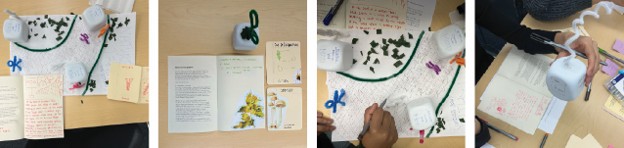
The paper asks how design as a mode of inquiry can support ecological responsibility in robotics. Can robots help us relate to the living world? The paper presents speculative co-design workshops on human-robot-environment interaction (HREI), centered on plants and ecological relations. Participants used a bespoke toolkit of more-than-human card decks, creative writing prompts, and soft prototyping materials. Analysis surfaced nine themes across three meta-themes, leading to three relational dimensions of HREI and early design principles for robots as mediators of multispecies, place-based relations.

Research on Robots and Botanical Literacy at IEEE RO-MAN Conference
In August, Broadening the Scope of Botanical Literacy: Speculative Prototyping Robots for Ecological Awareness, was published in the proceedings of the 35th IEEE International Conference on Robot and Human Interactive Communication (RO-MAN 2026). Ghajargar presented the research at the IEEE RO-MAN Conference in Kitakyushu, Japan, as part of a special session on HREI design that she organized and led with Hugo Simão of the University of Lisbon and Carnegie Mellon University.
The paper asks how design methods such as speculative prototyping can help us imagine new robots and new kinds of relationships among humans, robots, and the environment.
What if robots could help us care for plants and the planet? In two speculative co-design workshops with 45 art and design students and faculty, participants used card decks and soft prototyping materials to imagine robots as plant interpreters, companions, and ecological caretakers, from plant relationship therapists to seed-dispersing drones. Findings show how botanical literacy can become ecological literacy, and how speculative methods surface more-than-human perspectives for future human-robot-environment interaction (HREI) design.

Research on Tangible Conversational AI and Trust at AIxHEART Conference
Additionally, research led by Gharjargar was presented at the International Conference on AI x Humanities, Education, and Art (AIxHEART 2026) in Laguna Hills, California in September.
That work, in the paper, Cultivating Everyday Trust and Botanical Literacy through Designing Tangible Conversational AI, asks how tangible, embodied conversational agents might cultivate more reflective botanical literacy and plant care while attending to broader questions of trust in AI.
Conversational AI is increasingly part of our homes and gardens, but what does it take to trust it? Through prototyping and a collaborative autobiographical design study of two plant-focused designs, this paper explores how tangible interaction and conversation shape reflective engagement with plants. Early findings show that materials and interaction modes affect perceived reliability and agency, and that trust also depends on relational, affective, and ethical factors, not just usability and accuracy. The paper closes with implications for designing conversational AI that is both trustworthy and ecologically attuned.
The work was funded by the Patrick J. McGovern Foundation through an award to Ghajargar for the project “In Conversation with Landscapes: Designing Tangible Conversational Agents for Botanical Literacy.”
The paper was co-authored with former undergraduate researchers and advisees and a former colleague of Ghajargar’s and was presented at the conference by her former advisee from Chapman University.


People
