WPI researchers Shichao Liu, Albert Simeoni, and Reza Ziazi are pictured in a composite image that shows a wildfire igniting buildings.

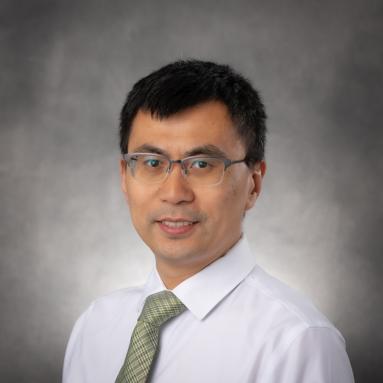
WPI researchers, from left, Shichao Liu, Albert Simeoni, and Reza Ziazi

WPI Launches Study to Determine Toxic Emissions from Burning Buildings

Researchers Shichao Liu, Albert Simeoni, and Reza Ziazi combine expertise in architectural and fire protection engineering to study toxins released when wildfires ignite buildings
Media Contact
November 19, 2026

When wildfires ignite, they burn more than just trees and grasses. That’s why WPI researchers Shichao Liu, Albert Simeoni, and Reza Ziazi are collaborating with a Northeastern University researcher to understand the emissions generated when wildfires burn buildings. 

“A lot of wildfire research focuses on burning vegetation, but wildfires also burn homes, offices, warehouses, and other structures near wild areas,” said Liu, an associate professor in the Department of Civil, Environmental, and Architectural Engineering. “Buildings contain construction materials that can emit aerosols and gases that are potentially harmful to human health.  We want to understand more about the potentially toxic compounds that are being released when plastics and other man-made materials in buildings burn.” 

The three-year project brings Liu together with Simeoni, a professor, and Reza Ziazi, an assistant research professor, in WPI’s Department of Fire Protection Engineering, and Shang Liu, an assistant professor at Northeastern University, who is collaborating with the team. The National Science Foundation has awarded $1,185,475 to the project, including $817,703 to WPI.  

How to study wildfire emissions in a lab

A critical factor in the research is that humans are increasingly encroaching on areas prone to wildfires. An estimated 99 million people live in areas where wild areas butt up against urban development, and millions of homes, valued at over $1 trillion, are at risk of impacts from wildfires. 

The researchers will study combustion and emissions from building materials in a small furnace at Northeastern and at medium- and large-scale combustion facilities in WPI’s Fire Protection Engineering laboratory.  

At WPI they will construct and burn midsize building models measuring about 2 to 4 feet high and incorporating materials such as drywall panels, glass-fiber insulation, petroleum-based shingles, softwood lumber, low-density foam from furnishings, nylon and polyester floor coverings, synthetic membranes, and wood engineered with resins. The materials will represent components of a building, including the plumbing, roofing, walls, floors, trusses, studs, cabinets, and furniture.  To study emissions at a larger scale, the researchers will construct and burn larger building models measuring nearly 5 feet high. 

The team will analyze emissions for their chemical composition, temperature, and the size of particles emitted.  

The researchers also will explore how aerosol and gas emissions vary across different building materials, whether emissions from burning buildings that contain multiple materials can be predicted based on what is known about emissions from single materials, and whether emissions from small-scale experiments can predict emissions from large, real-world fires. 

“Studies have detected hydrocarbons, carbon monoxide, chlorine, and metals in emissions from wildfire-ignited structure fires,” Simeoni said. “These experiments will enable us to measure emissions in a way that we cannot safely achieve during real wildfires. In addition, we will be able to examine how construction techniques, such as building vents that carry fresh air into attics, may fuel a building fire and impact emissions.” 

Wildfire and smoke research at WPI

The new project builds on a long history of architectural and fire protection engineering excellence at WPI. 

  • Shichao Liu focuses his research on sustainable building design with an emphasis on wildfire smoke and its impact on indoor spaces.  
  • Simeoni is an expert on wildfires, large-scale fire testing, and fire dynamics, which explains the physical behavior of fire.  
  • Ziazi’s research concentrates on how energy, heat, and mass move through liquids, gases, and vapors. He also researches computational and data-driven models of combustion and emissions. 

“We cannot improve our fire protection and public health policies if we do not have a clear understanding of the chemical composition of emissions from structures that are burning because of wildfires,” WPI’s Liu said. “With greater understanding, we might be able to develop new cleaning and air-purifying technologies for homes. We might be able to design, build, and operate new buildings with indoor ventilation systems that can better deal with smoke and emissions. First, though, we need to expand what we know about emissions.”

Want to learn more about Research at WPI? Subscribe to the monthly newsletter.


Profiles

Albert Simeoni
Albert Simeoni
Professor Simeoni is an internationally recognized expert in fire and wildland fire and fire science, with over 120 journal papers, conference papers, and book chapters. He has more than 20 years of experience developing experimental, analytical, and numerical techniques to bette [...]
read more
Shichao Liu
Shichao Liu
Sabbatical Leave in Fall 2026 Openings in Spring and/or Fall 2027: Postdoc in Fire Experiments and Modeling (here) PhD student in Fire Experiments and Modeling (here) PhD student in Human-Environment Interaction (here) Dr. Shichao Liu is an Associate Professor in the Department [...]
read more