Worcester Polytechnic Institute, a pioneer in a higher-education learning model that is proving to be essentially AI-proof, will introduce a new framework for educators concerned about preparing students to learn and thrive in an AI-shaped world. The new framework, Impact by Design, will be shared this week at the Society for Experiential Education’s 55th annual conference, themed “Experience Matters: 55 Years of Impact, Innovation, and Community,” being held in Savannah, Ga.
The impact of AI on education
Across higher education, there is real debate about the role of artificial intelligence in learning: Is it simply a technology tool? A shortcut? A disruptor? Many worry it is a way for students to get answers without gaining knowledge. AI can produce answers in a few seconds, a temptation for a student looking to just get a grade. But that shortchanges students by giving them answers without the context or the experience of developing ideas and knowledge themselves. Today, more than ever, students need to understand how to ask questions and weigh perspectives as they gain the ability to understand problems and create solutions in real-world settings.
So how can educators give students the experiences they need to truly grow and develop their knowledge and skills?
How to “AI-proof” higher education
For more than 50 years, WPI has centered its education on a project-based model whereby students work through complex questions, assess various factors, nuances, and perspectives, and develop ways to demonstrate and apply their growing knowledge to answer the questions.
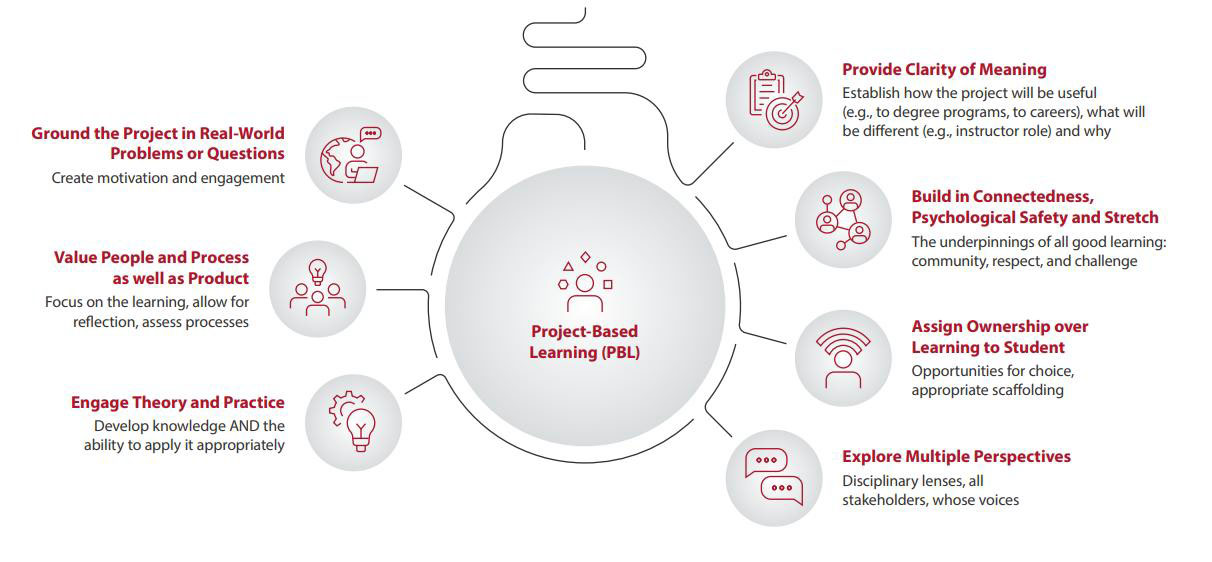
Based on WPI’s vast research and practice with project-based learning, the university’s renowned Center for Project-Based Learning developed the Impact by Design framework to help instructors consider not only what students will produce, but how they will learn, work with others, and demonstrate their growth along the way.
Recent reports from the National Academies of Science, Engineering, and Medicine and Massachusetts Institute of Technology underscore the timeliness of this new framework: The National Academies calls for active, student-centered learning and identifies project-based learning as a way to deepen disciplinary engagement, while an MIT committee report highlights how AI is challenging traditional assignments and assessment and emphasizes the value of social learning.WPI’s Impact by Design framework’s design principles give educators the tools to:
- Ground projects in real-world problems or questions
- Value people and process, as well as the final product
- Connect theory and practice
- Make the purpose of assignments clear
- Build connectedness, psychological safety, and appropriate challenge
- Give students ownership of their learning
- Explore multiple perspectives