Of all the ways WPI’s project-based learning model comes to life, there are few as all-encompassing as an experience at one of the university’s more than 50 global project centers through the Global Projects Program. Far from a traditional classroom, students immerse themselves in a community, learning about the people and the place in a way that leaves a lasting impact.
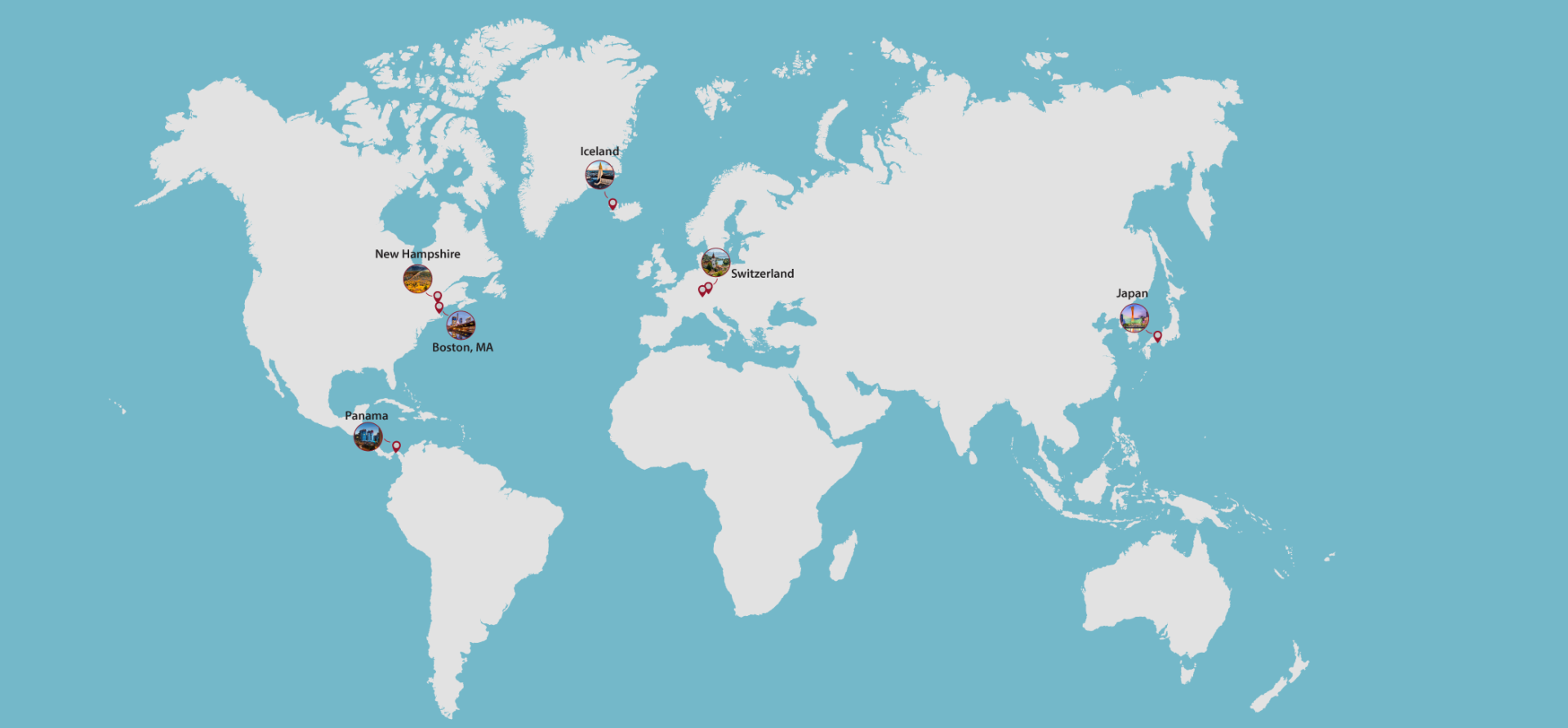
For nearly 20 years, students, faculty, community members, and local organizations have collaborated in the Panama City, Panama, Project Center to learn how to develop solutions to problems impacting the area. Panama is one of only a handful of sites where students working on interdisciplinary Interactive Qualifying Projects (IQPs) and the more major-focused Major Qualifying Projects (MQPs) reside and work at the project center location simultaneously.
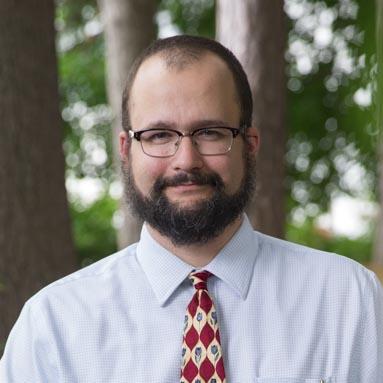
“Having the IQP and MQP students in Panama together gives everyone the ability to hang out with fellow students other than their teammates,” says current co-director and co-advisor Aaron Sakulich, associate professor in the Department of Civil, Environmental, and Architectural Engineering (CEAE).
Sakulich, who co-directs with Grant Burrier, associate professor of teaching in the Department of Integrative and Global Studies (DIGS), notes that the increased student presence opens a new element for the project experience. The students don’t work on the same projects, but they socialize and enjoy the local insight from the on-site faculty members who are familiar with local customs and logistics. The project center location, on a former U.S. Army base that is now an educational campus, is a half hour from both a rural rainforest and the country’s capital city of 1.5 million people and allows easy access to various attractions.
The project center experience is amplified by a large and dedicated WPI alumni group in Panama. They offer their support in many ways, even attending the final presentations before the students wrap up their time in Panama. For several years WPI alum Fernando Motta ’83 has even sponsored the presentations, says Sakulich.
“What I like about Panama is that it’s an entirely unique place,” says Sakulich, who spent a sabbatical in Panama in 2024 as part of the Fulbright Scholar Program. “It’s a combination of Latin American, Caribbean, U.S., and indigenous cultures. Of course, it has the canal, but it also has beautiful rainforests and a very cosmopolitan capital city. There’s nowhere on earth with quite this mix of history and cultures. And, of course, it’s great for birdwatching.”
In addition to Panama, students are working on Interactive Qualifying Projects in:
Boston, Mass., with advisors Courtney Kurlanska (DIGS) and Caitlin Ferrarini (DIGS)
Reykjavik, Iceland, with advisors Holly Ault (The Global School) and Alejandro Manga (The Global School)
White Mountains, N.H., with advisor Kent Rissmiller (DIGS)
Zurich, Switzerland, with advisors Uma Kumar (Chemistry and Biochemistry) and Ruth McKeogh (The Global School)
Students are working on Major Qualifying Projects in:
Osaka (Ritsu), Japan, with center directors Gillian Smith (Interactive Media and Game Development) and Ralph Sutter (IMGD)
Panama City, Panama, with center director Aaron Sakulich (CEAE)
Switzerland (Fribourg), with center director Nancy Burnham (Physics)
Switzerland (Waedenswil), with center director Nancy Burnham
Topics

People