Emmanuel Agu is currently the Harold L. Jurist '61 and Heather E. Jurist Dean's Professor in the computer science department at WPI having received his Masters and PhD in electrical and computer engineering at the University of Massachusetts at Amherst. His research interests are in the areas of Artificial Intelligence in Healthcare, Mobile Health, mobile and ubiquitous computing, and computer graphics. He is especially interested in research into how to use a smartphone or smartwatch as a platform to deliver better healthcare. Broadly speaking, his area of expertise is in artificial intelligence methods for medical image and video analysis, mobile health and smartphone sensing of user health.His research has been funded by the NSF, NIH, DARPA, the US department of education, US Army Research Labs, Google, Nvidia and AMD. His research has been published in various ACM and IEEE conferences.
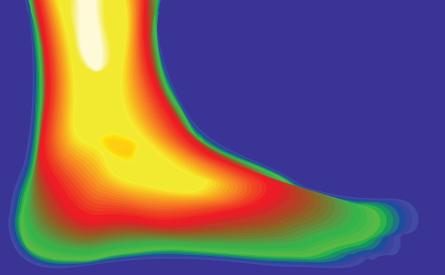
Since 2011 and in collaboration with collaborators at the UMass Medical school, he has been the PI of multiple NSF/NIH grants to support a wound AI project. That project’s goal is to develop a mobile application that automatically analyzes the healing progress of patients’ foot ulcers and helps visiting nurses make more accurate assessments in the patients’ home. He is an MPI of an NIH HEAL center grant that is using AI to predict which patients will respond to complementary pain treatments from objective and sensor data. He is also the MPI of the methods core and providing machine learning expertise, as well as a member of the steering and administrative committees for an NIH center for implementing and translating AI-driven technologies to prevent suicide. His other AI-related health research includes Alcogait, a smartphone app that estimates the intoxication level of smartphone users and an AI-driven app that assesses the motor skill scores of Parkinson patients’ walks. He recently worked on a DARPA-funded project on analyzing smartphone biomarkers for Traumatic Brain Injury (TBI) and infectious diseases. He has previously worked on a range of other mobile applications including one for obesity counseling, and for administering exercise as a drug to mitigate alcohol addiction.
Emmanuel Agu is currently the Harold L. Jurist '61 and Heather E. Jurist Dean's Professor in the computer science department at WPI having received his Masters and PhD in electrical and computer engineering at the University of Massachusetts at Amherst. His research interests are in the areas of Artificial Intelligence in Healthcare, Mobile Health, mobile and ubiquitous computing, and computer graphics. He is especially interested in research into how to use a smartphone or smartwatch as a platform to deliver better healthcare. Broadly speaking, his area of expertise is in artificial intelligence methods for medical image and video analysis, mobile health and smartphone sensing of user health.His research has been funded by the NSF, NIH, DARPA, the US department of education, US Army Research Labs, Google, Nvidia and AMD. His research has been published in various ACM and IEEE conferences.
Since 2011 and in collaboration with collaborators at the UMass Medical school, he has been the PI of multiple NSF/NIH grants to support a wound AI project. That project’s goal is to develop a mobile application that automatically analyzes the healing progress of patients’ foot ulcers and helps visiting nurses make more accurate assessments in the patients’ home. He is an MPI of an NIH HEAL center grant that is using AI to predict which patients will respond to complementary pain treatments from objective and sensor data. He is also the MPI of the methods core and providing machine learning expertise, as well as a member of the steering and administrative committees for an NIH center for implementing and translating AI-driven technologies to prevent suicide. His other AI-related health research includes Alcogait, a smartphone app that estimates the intoxication level of smartphone users and an AI-driven app that assesses the motor skill scores of Parkinson patients’ walks. He recently worked on a DARPA-funded project on analyzing smartphone biomarkers for Traumatic Brain Injury (TBI) and infectious diseases. He has previously worked on a range of other mobile applications including one for obesity counseling, and for administering exercise as a drug to mitigate alcohol addiction.
Scholarly Work
Busaranuvong, P., Agu, E., Saadati Fard, R., Kumar, D., Gautam, S., Tulu, B., Strong, D. and Loretz, L., 2025. Explainable, multi-modal wound infection classification from images augmented with generated captions. ACM Transactions on Computing for Healthcare.
Liu, Z., Agu, E., Pedersen, P., Lindsay, C., Tulu, B. and Strong, D., 2023. Chronic Wound Image Augmentation and Assessment Using Semi-Supervised Progressive Multi-Granularity EfficientNet. IEEE Open Journal of Engineering in Medicine and Biology.
Abdulsalam Almadani, Atifa Sarwar, Emmanuel Agu, Monica Ahluwalia, Jacques Kpodonu, HCM-Echo-VAR-Ensemble: Deep Ensemble Fusion to Detect Hypertrophic Cardiomyopathy in Echocardiograms, IEEE Open Journal of Engineering in Medicine and Biology (OJEMB), 2023.
Sarwar, Atifa, Abdulsalam Almadani, and Emmanuel O. Agu. "Early Time Series Classification Using Reinforcement Learning for Pre-Symptomatic Covid-19 Screening From Imbalanced Health Tracker Data." IEEE Journal of Biomedical and Health Informatics (2024)
Atifa Sarwar, Emmanuel Agu, and Abdulsalam Alamadani 2023. CovidRhythm: A Deep Learning Model for Passive Prediction of Covid-19 Using Biobehavioral Rhythms Derived from Wearable Physiological Data. IEEE Open Journal of Engineering in Medicine & Biology, 4, pp.21-30
Palawat Busaranuvong, Emmanuel Agu, Deepak Kumar, Shefalika Gautam, Reza Saadati Fard, Bengisu Tulu, and Diane Strong. "Guided Conditional Diffusion Classifier (ConDiff) for Enhanced Prediction of Infection in Diabetic Foot Ulcers, IEEE Open Journal of Engineering in Medicine and Biology (OJEMB), 2024