On Friday, Feb. 10, one of WPI’s most anticipated late-winter undergraduate events, the President’s IQP Awards, will be celebrated—five teams are competing for the top honor.
For decades, the IQP Awards ceremony has been a celebration of one of WPI’s cornerstone undergraduate projects. “Student teams enter their projects for consideration at the beginning of their senior year, after they have finished their travels and IQP work,” says Kent Rissmiller, dean ad interim of the Interdisciplinary and Global Studies Division and a professor in Social Science & Policy Studies and longtime host of the event.
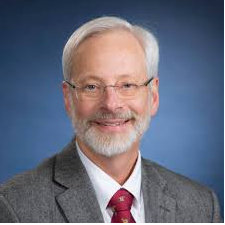 Kent Rissmiller
Those teams who are finalists for the President’s IQP Awards have completed outstanding projects at the intersection of science, technology, and society. In addition, their projects have a significant impact on the organizations and communities who sponsor the teams.
This year, over 60 entries were submitted for the award. Teams can enter on their own; they do not need to be nominated by faculty advisors. A screening panel of four faculty members reviews the entries and selects the five finalists. After Thanksgiving, the finalists are announced. The screening panel also selected an additional team for an honorable mention. At the IQP Awards event, members of the five finalist teams will present before a panel of judges as they compete for the top honor.
This year’s panel of judges includes President Laurie Leshin; Winston Wole Soboyejo, dean of engineering; Sharon Gaudin, a senior writer at Computerworld; Lorraine Bolsinger, vice president of Executive Leadership Programs at GE; and Amy Jessen-Marshall, vice president for integrative learning and the global commons at the Association of American Colleges and Universities.
“We want to spotlight the exceptional projects that our students complete,” says Rissmiller. “The students and faculty are rightfully proud of their accomplishments, but we also want the world to know what they can do. The excellent projects really are impressive. Sometimes it’s hard to imagine how they do it.”
And IQPs are not meant to be easy. Students complete the projects locally and across the globe, and, as in real-life projects, unexpected things happen. Students grapple with all kinds of challenges and are expected to do their best with what they are given.
Entering the IQP Awards provides students an opportunity to show off their project work and also gives them a chance to share the back story of what went into the project. Teams submit their project report and executive summary and their advisors are asked to weigh in as well. “The finalists meet with advisors in January to polish their presentations and rehearse,” says Rissmiller. Last month, the teams even had the chance for a short practice run in front of an alumni group in Nashua.
“We want to spotlight the exceptional projects that our students complete. The students and faculty are rightfully proud of their accomplishments, but we also want the world to know what they can do. The excellent projects really are impressive. Sometimes it’s hard to imagine how they do it.” -Kent Rissmiller
The day is busy and begins with the panel assessing the five project reports in the morning. “After that, the judges have lunch with juniors who are preparing to go off on their own IQP adventures in D-Term this year,” says Rissmiller. In the afternoon, the finalists give 20-minute presentations to an open audience that includes students, faculty, family, and friends. Each presentation is followed by a 10-minute question-and-answer period with the judges and audience.
After the presentations, a reception for students, families, and advisors is held at Higgins House. Winners are announced at the reception.
This year’s projects:
Evaluating the Need for a Consumer Focused Smoke Alarm Performance System
Students: Everett Vincent Pope Baker, Tyler J. Bennett, James Jarlath Mosteller, and John V. Williams
Advisors: Brigitte Servatius and Fred Looft
Examining the Development of Nature-Urban Routes in San José, Costa Rica
Students: Cara Jean Bereznai, Bryce C. Kaw-Uh, Benjamin J. Parent, and Catherine Souza
Advisors: Derren Rosbach and Melissa Belz
Improving Healthcare Coordination in the Mandi District
Students: Edward W. Dring, Victoria K. Johnson, and Jacob R. Maalouf
Advisors: Ingrid Shockey and Stephen McCauley
Preventing Violence Against Women: Training Resources to Empower the Broadmeadows Community
Students: Megan Shannon Irene Belval, Naumilda Como, Cameron T. Jones, and Conrad M. Ruiz
Advisors: Holly Keyes Ault and James Hanlan
Stakeholder Study: Resource Management of Wairarapa Moana
Students: Natalie L. Diltz, Jena M. Mazzucco, Austin D. Scott, and Jeffrey Allen Sirocki
Advisors: Robert Kinicki and Bethel Eddy
Honorable Mention: Alternative Water Treatment: Designing a Floating Island that Integrates Social & Technical Elements at American Farm School in Thessaloniki, Greece
Students: Mary Prescott, Talia Solomon, Meghan Trahan
Advisors: Nicola Bulled and Robert Hersh
- By Julia Quinn-Szcesuil